
Solar + BESS Financial Model Excel Template
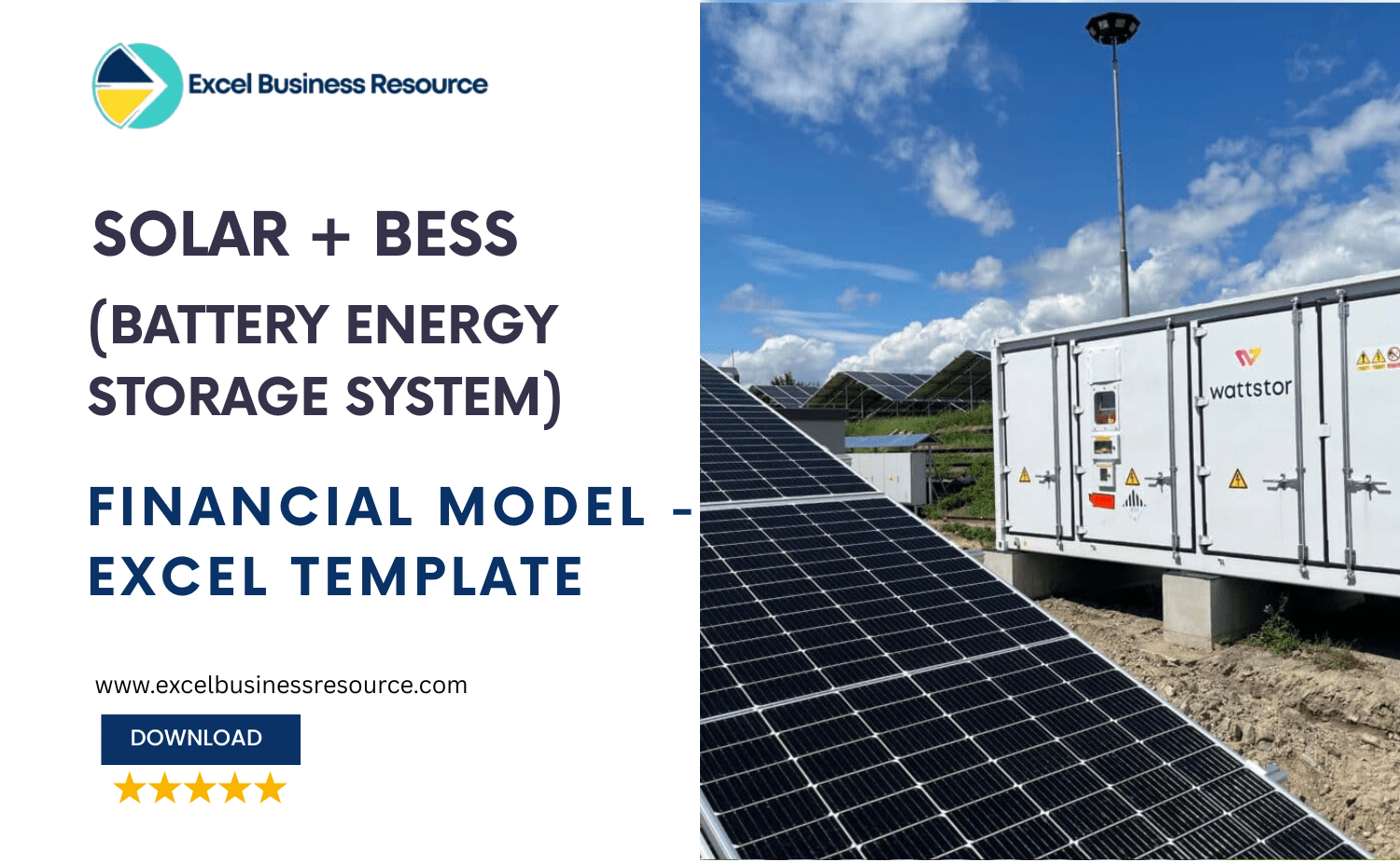
Fully editable Solar BESS Financial Model Template in Excel, designed to provide a detailed and professional 10-year financial plan tailored for Solar PV + battery energy storage startups. This pre-built model offers extensive features to streamline financial forecasting, investment analysis, and strategic planning.
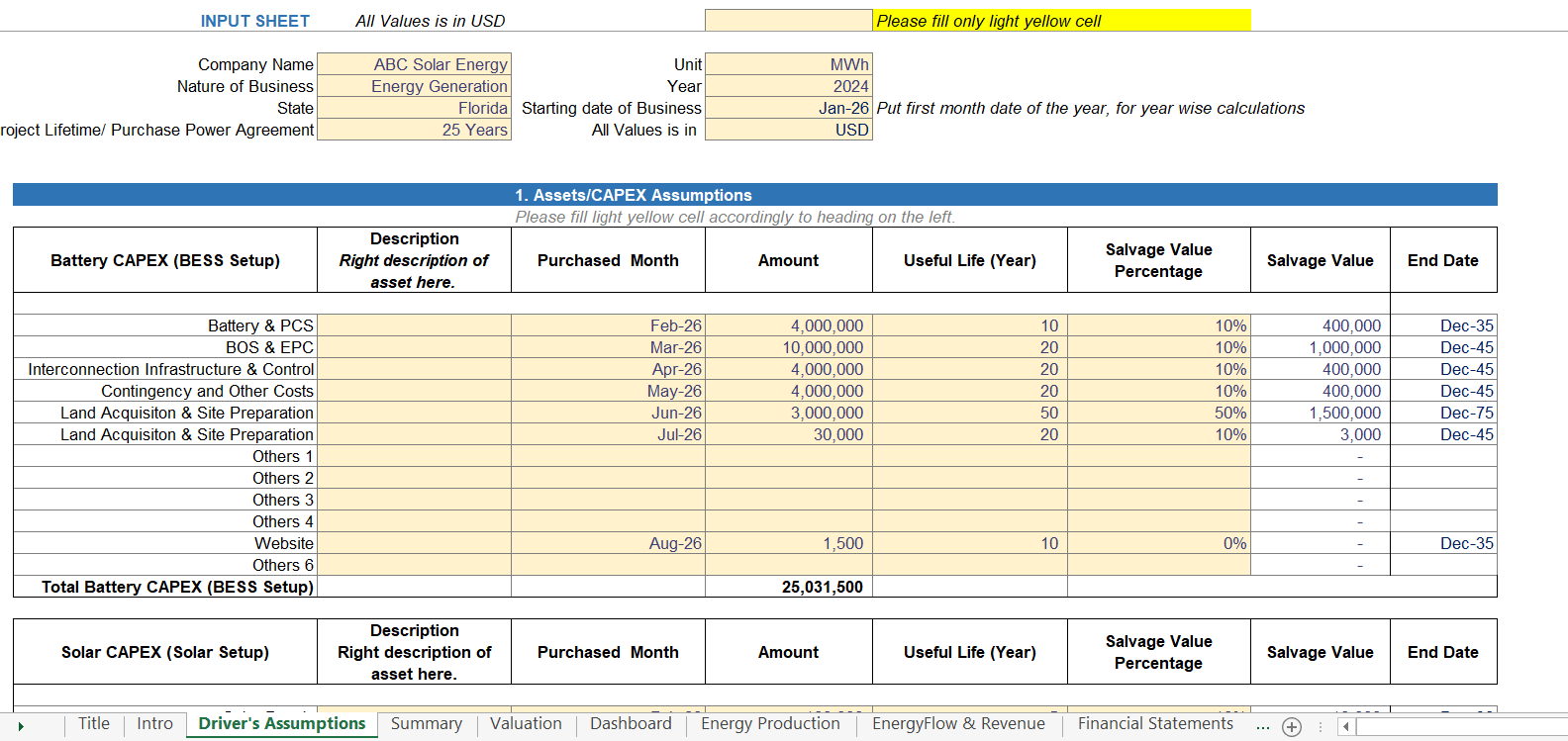
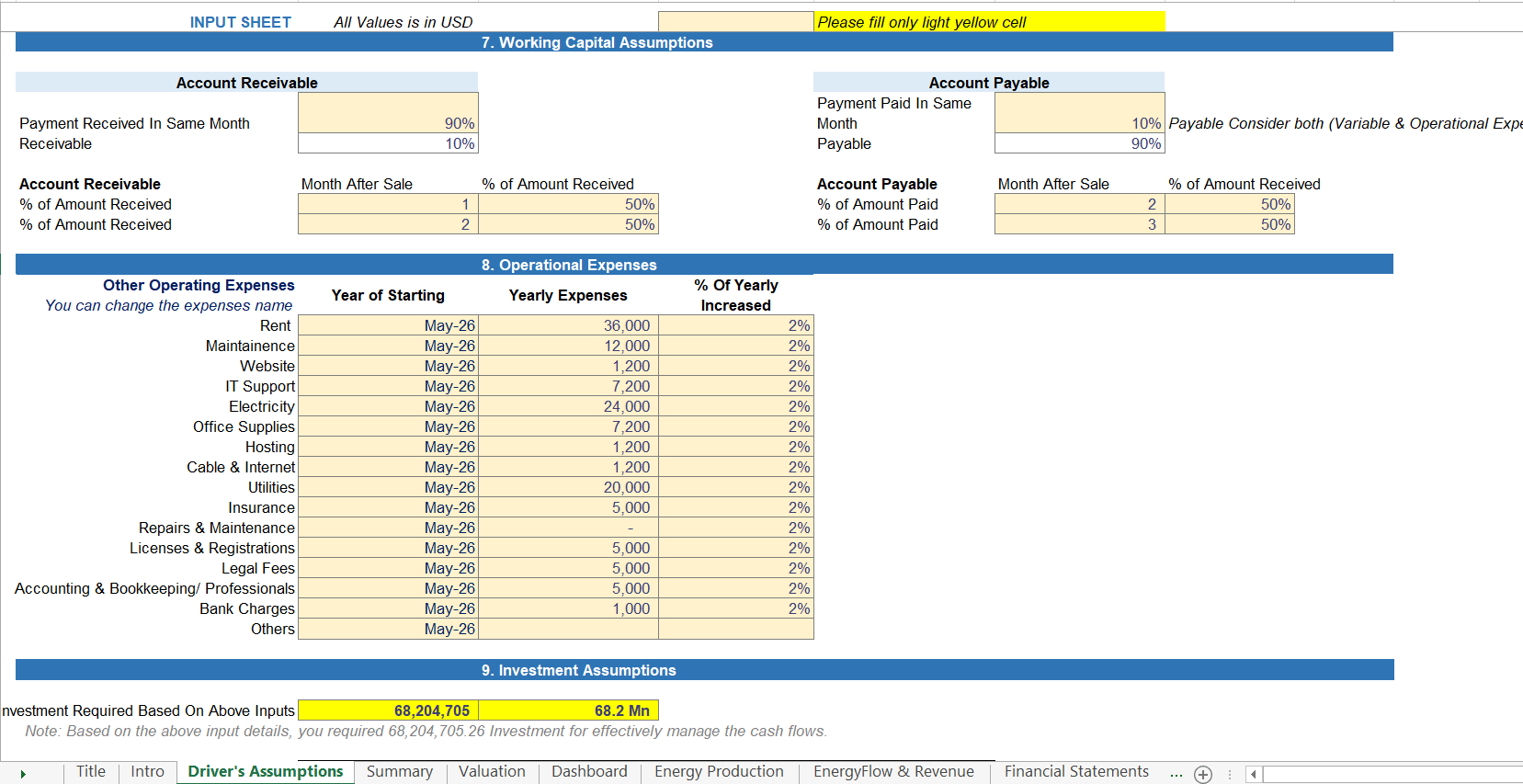
- Detailed Driver’s Assumptions i.e. Investment, R&D, Revenue & Cost Assumptions
- Upto to 10-Year Forecasting Model
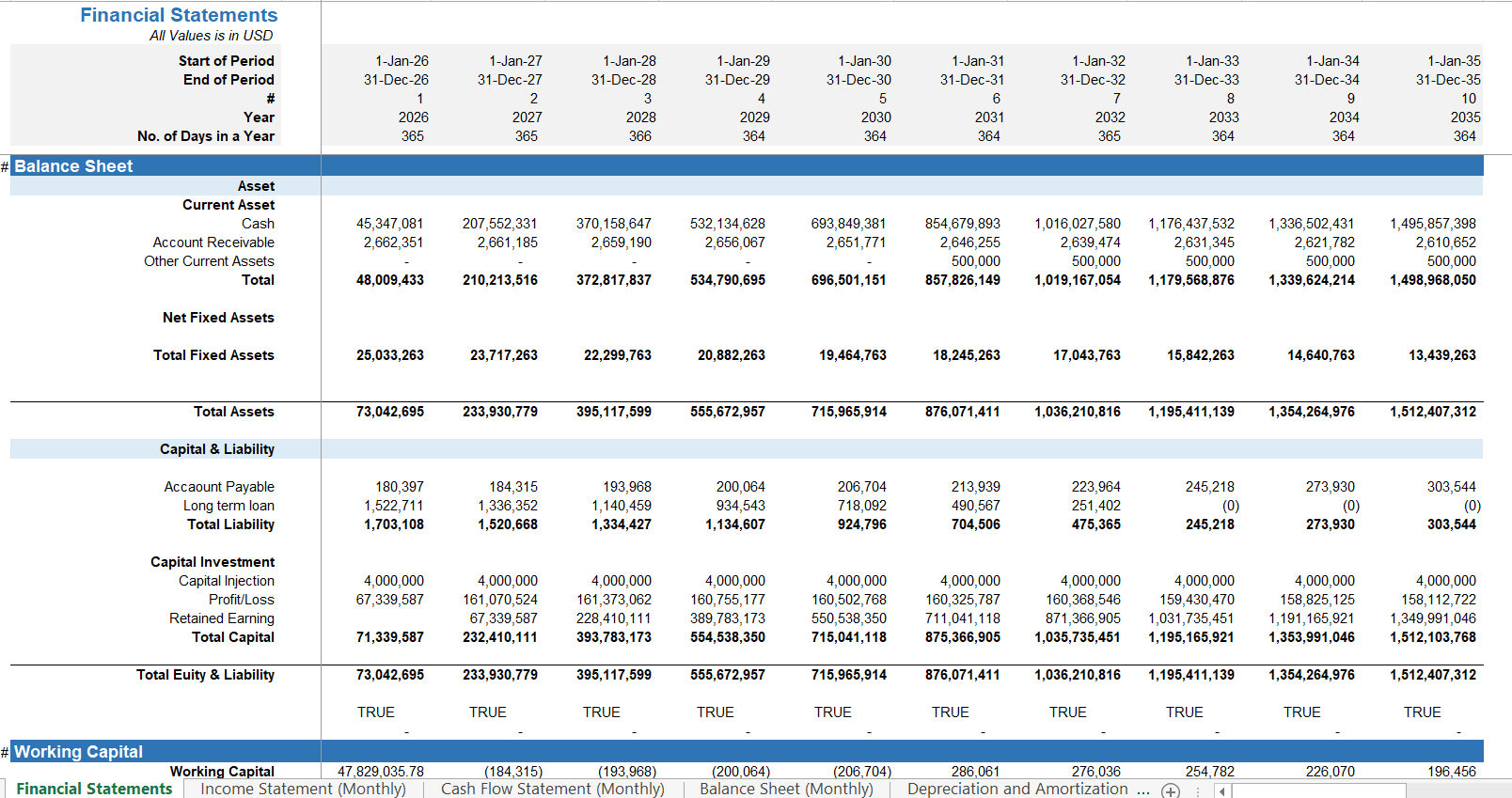
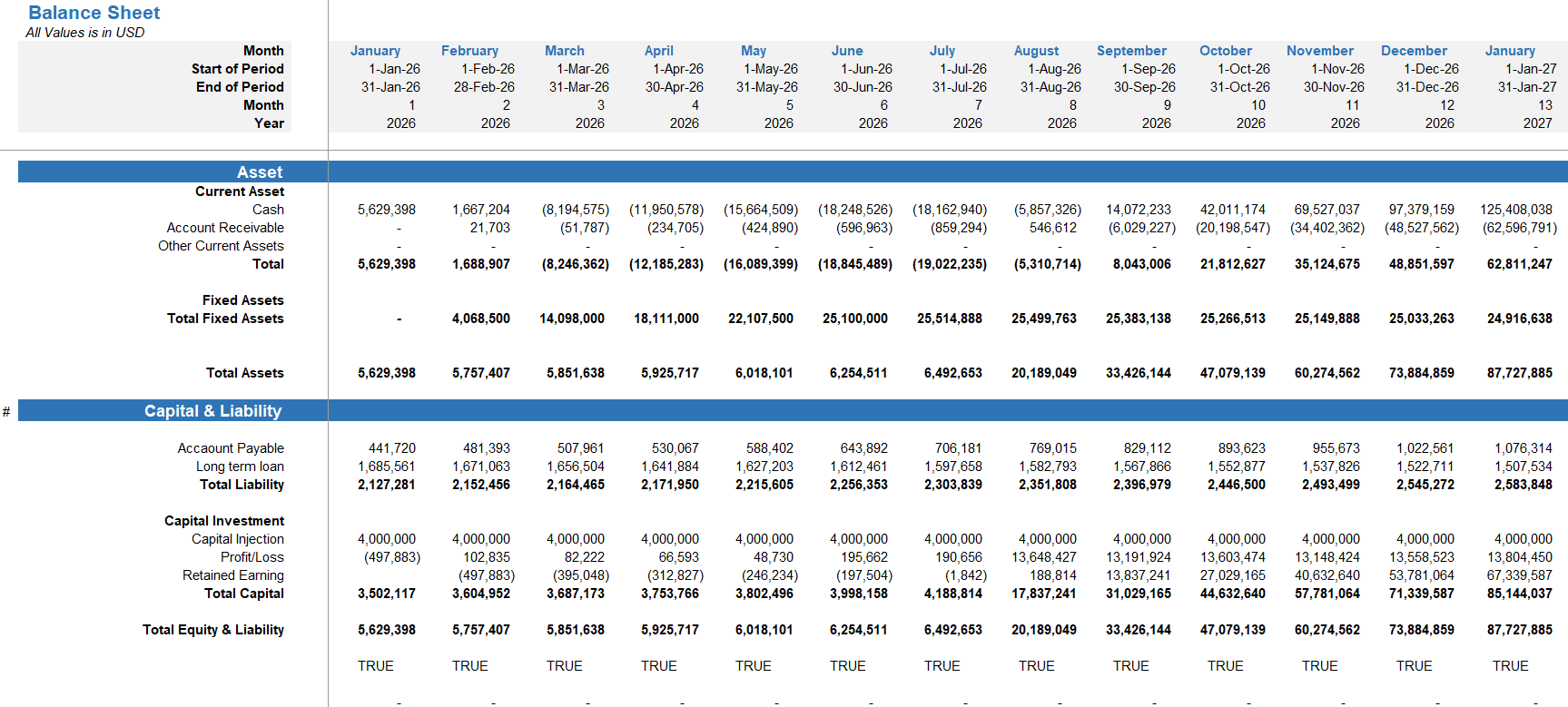
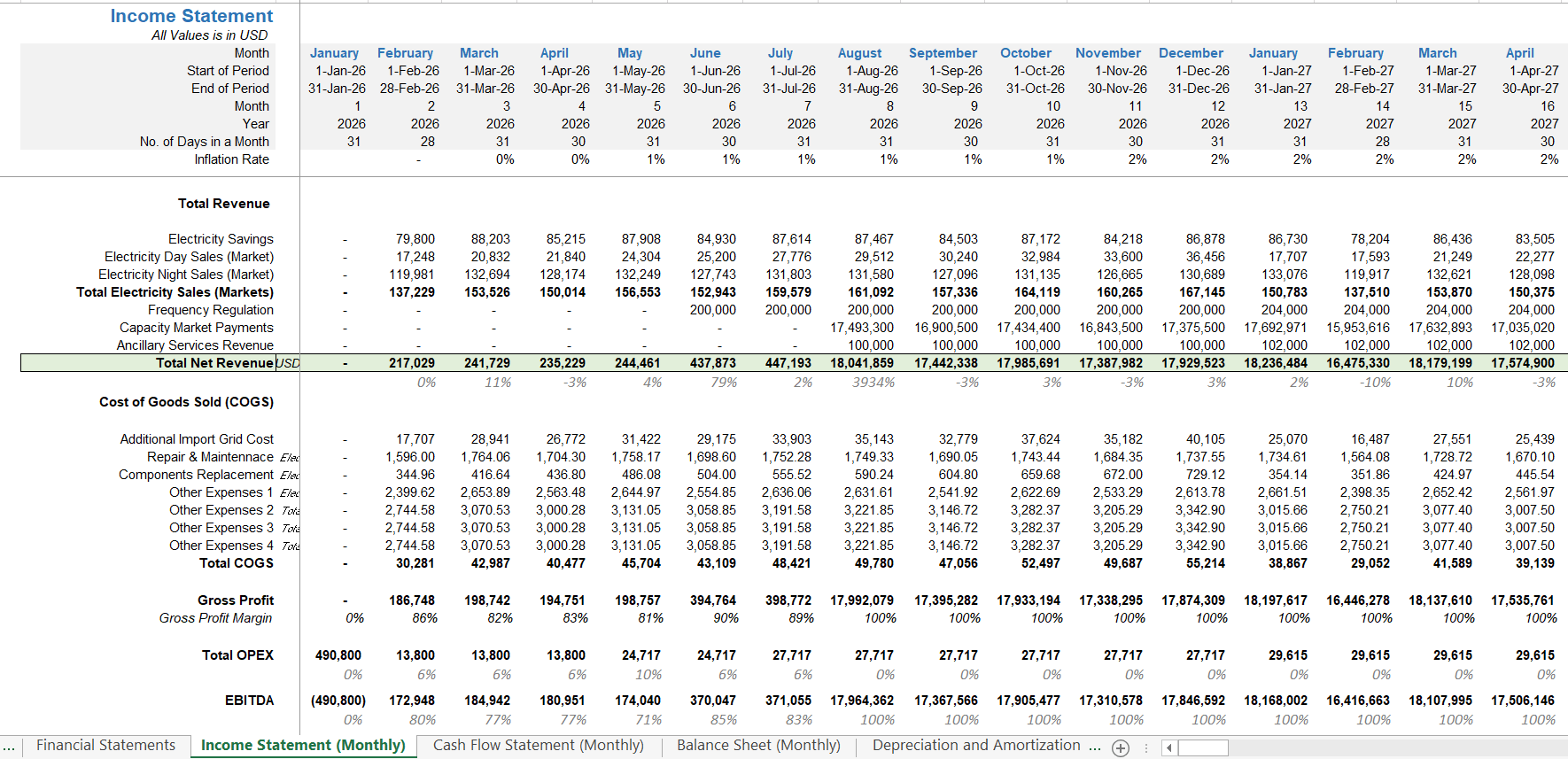
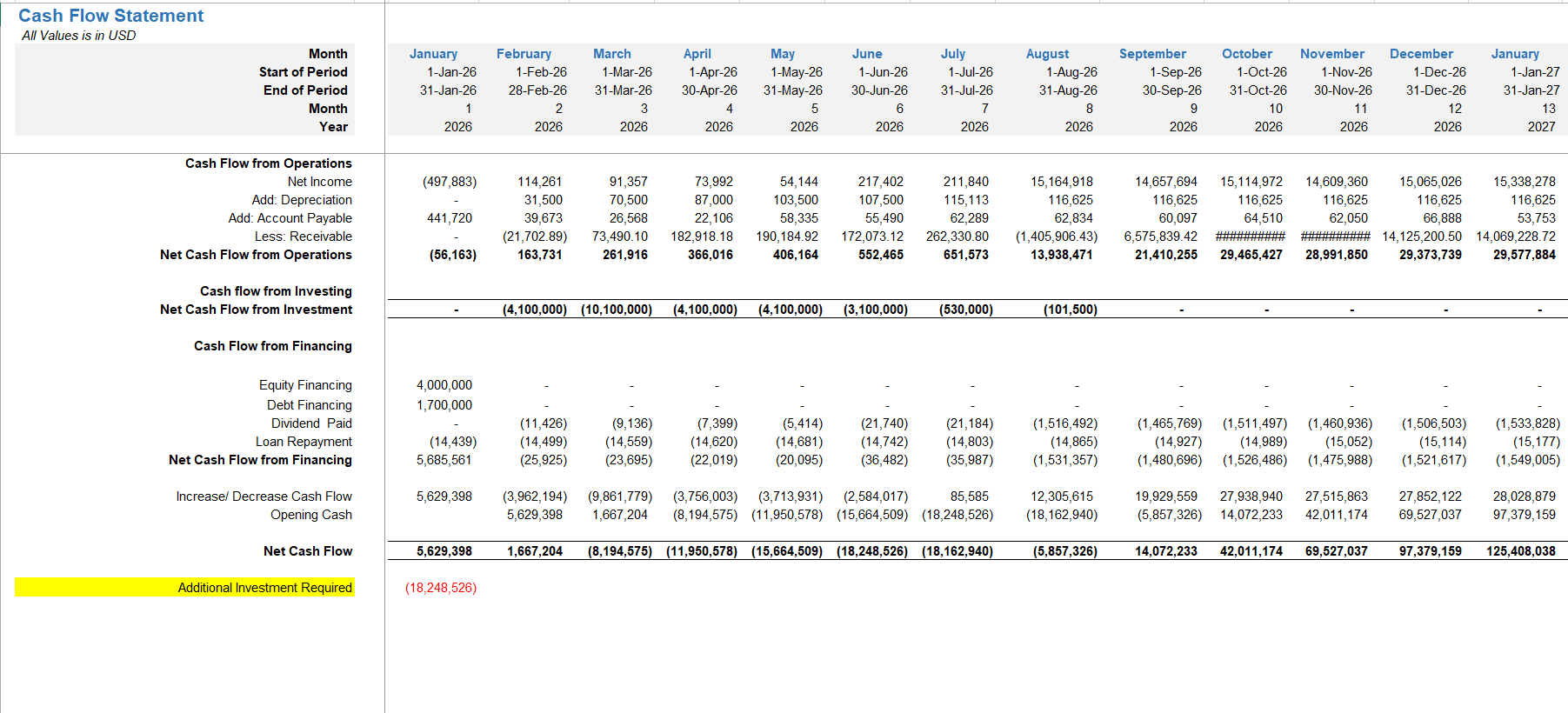
- Financial Projections With P&L, Cash Flow, Balance Sheet
- Detailed Headcount, Expenses & CAPEX Planning
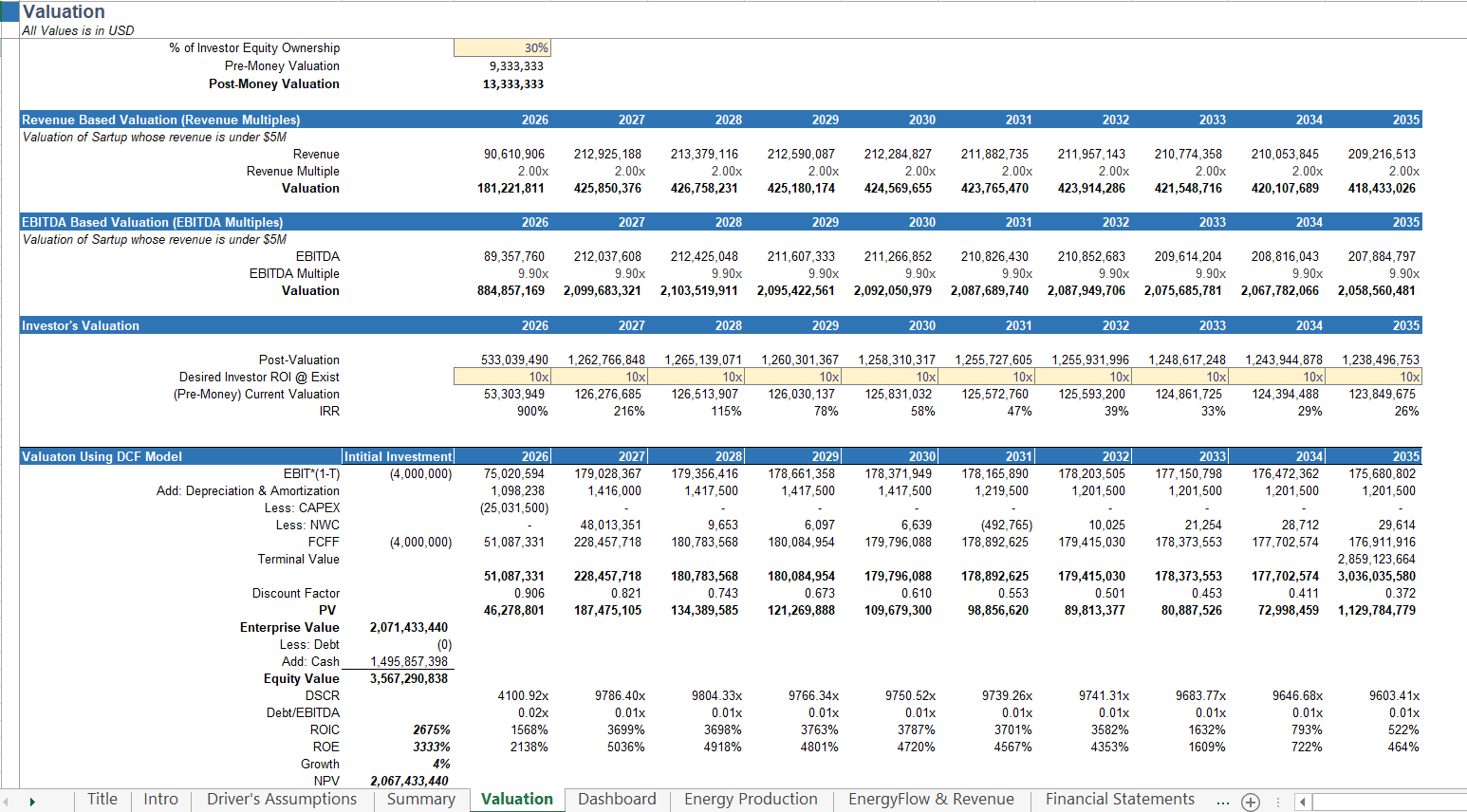
- Advance Valuation i.e. DCF Valuation, EV/R&D Valuation, EBITDA & Revenue Multiple Valuation, Investor Valuation, Pre & Post Money Valuation.
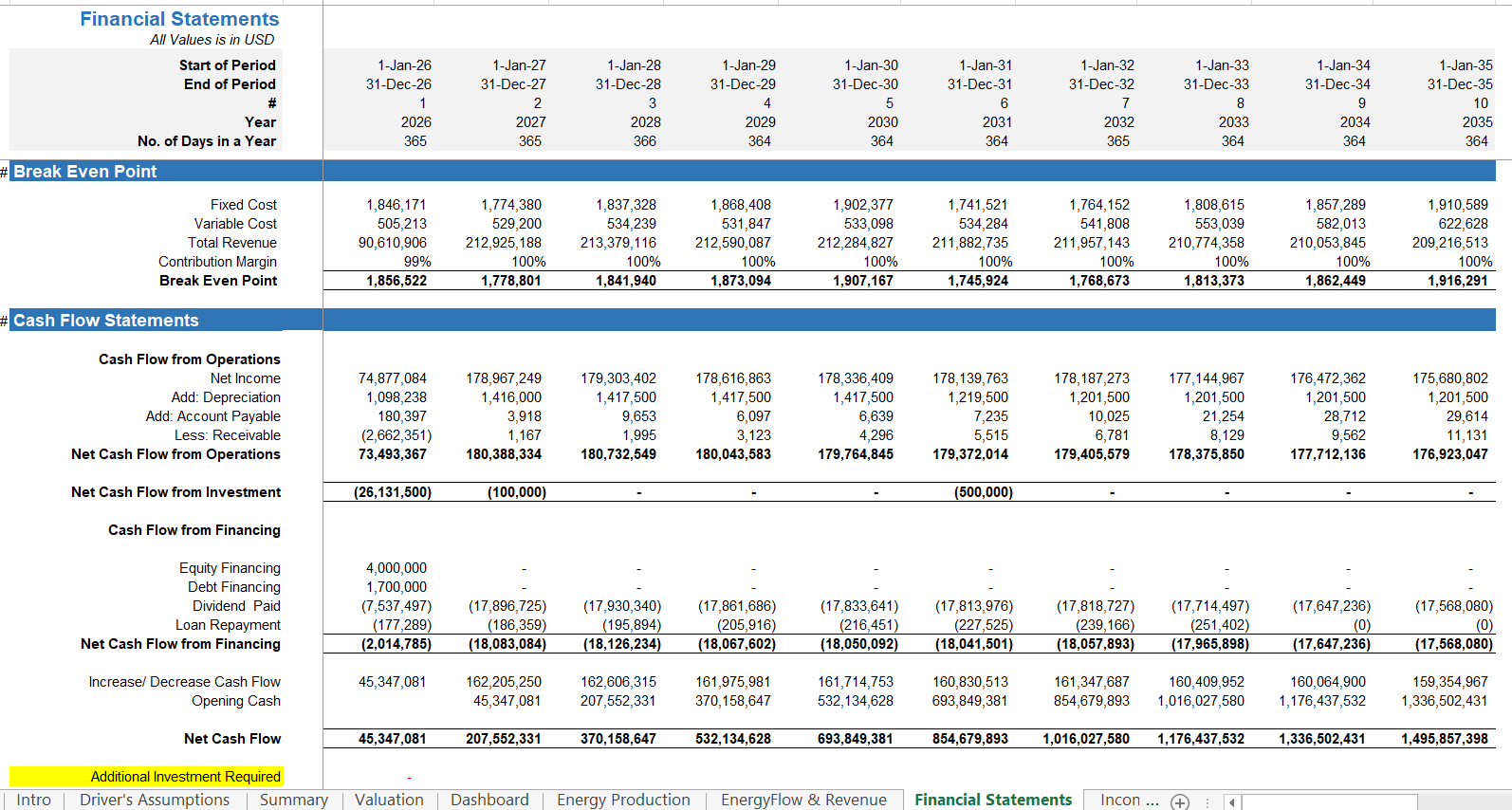
- Breakeven Analysis, NPV, IRR, consolidated and each project
- Sensitivity Analysis, KPIs & Metrics, Burn Rate, Cash Runway
- Fully editable
$300.0 Original price was: $300.0.$140.0Current price is: $140.0.
Why Choose Our Solar + BESS Financial Model Excel Template
Startups have used our financial model templates to raise up to $5 million in Series A capital and seed funding. These models were developed by FMVA-certified professionals. We have worked with over 50 businesses and created more than 500 financial forecasting and valuation models for startups.
- Save 40 Hours of Manual Work
- 100+ Customized Assumptions / Drivers
- Advanced Valuation Methods Applied
- In-depth Financial Projections
- Free Supports & Error Corrections
- Founder & Investor Ready Model
Description
Solar + BESS Financial Model Excel Template
💡Stop building from scratch. Download the only Excel financial model purpose-built for Solar + Battery Energy Storage System (BESS) projects — and walk into your next investor or bank meeting fully prepared.
Why Combine a Solar Farm with a Battery Energy Storage System (BESS)?
A standalone solar farm generates power only during daylight hours — leaving you with zero revenue at night and zero protection against grid price swings. That’s a fundamental business limitation. By integrating a Battery Energy Storage System (BESS) into your solar power project, you can store excess daytime energy and discharge it precisely when electricity prices peak, turning an idle asset into a continuous, high-value revenue stream.
But a Solar + BESS project is not a simple model to build. You’re dealing with capacity degradation, round-trip efficiency losses, hourly dispatch strategies, frequency regulation markets, Power Purchase Agreements (PPAs), and a capital stack that spans tens of millions of dollars. Get the numbers wrong, and no bank or investor will touch it.
💡This Solar BESS Financial Model helps you tackle every complexity of a combined Solar PV + Battery Energy Storage project — from energy dispatch optimization and battery degradation forecasting, to DCF valuation, IRR analysis, and a complete investor-ready financial plan.
This Solar + BESS Financial Projection Model helps you solve:
- Excess Solar Production Analysis: Compare expected energy consumption against hourly Photovoltaic (PV) output to determine exactly how much surplus energy is available to charge your battery — month by month and hour by hour.
- Optimizing Battery Size & Dispatch Strategy: Determine the ideal battery capacity for your specific goals — energy self-sufficiency, grid export profit maximization, or emergency backup reserve — and model exactly when to charge and discharge for maximum financial return.
- Managing Battery Degradation Over Time: Accurately forecast long-term capacity fade using up to 8 degradation modelling methodologies. Plan future battery replacements and ensure your project remains profitable across its entire operational lifetime.
- Electricity Price Arbitrage Opportunities: Model the financial impact of hourly and seasonal electricity price fluctuations across off-peak and peak tariffs. Identify the most profitable charging and discharging windows — and whether buying from the grid at low prices to sell at peak rates makes financial sense.
- Ensuring Bankability & Investor Confidence: Justify your significant CAPEX investment with a rigorous financial feasibility analysis — including NPV, IRR, DSCR, and DCF valuation — that gives banks, infrastructure funds, and energy investors the data they need to approve funding.
Who Can Use Solar Farm With BESS Financial Plan?
This Solar BESS Financial Spreadsheet Template is designed for a wide range of use cases and is an indispensable tool for:
|
|
Energy Developers & EPC Contractors | Accurately forecast project financials, optimize Solar PV + BESS system sizing, and prepare bankable financial models for client presentations. |
Infrastructure & Energy Investors | Evaluate the financial viability and projected return on investment of a Solar + BESS project with clear IRR, NPV, and DCF outputs. |
Project Finance Teams & Banks | Assess debt serviceability with DSCR calculations, loan amortization schedules, and sensitivity analysis across electricity price scenarios. |
Commercial & Industrial (C&I) Owners | Quantify the cost savings and financial benefits of adding a Solar Farm with battery storage to your facility — and determine your payback period. |
Micro-Grid Operators | Plan and optimize energy production, storage, and consumption for residential, commercial, or industrial micro-grid deployments. |
Consultants & Financial Advisors | Deliver investor-grade Solar BESS financial projections to clients in hours — not weeks — without building complex models from scratch. |
Key Features & Benefits
This model gives you complete control over your Solar + BESS project’s financial planning, with features that go far beyond a basic spreadsheet. Go beyond generic assumptions with our purpose-built Solar PV and Battery Energy Storage System modelling capabilities:
- Comprehensive 10-Year Financial Forecasting: Analyze your project’s full performance with a detailed 10-year forecast broken down by month — providing granular insight into energy production, revenue ramp, EBITDA trajectory, and cash flow timing across every period.
- Simple Grey-Cell Input System: All assumptions are clearly marked with grey-colored cells on a single Driver’s Assumptions Sheet. Fill in your project parameters and the entire model — energy production, revenues, costs, financial statements, and valuation — updates automatically.
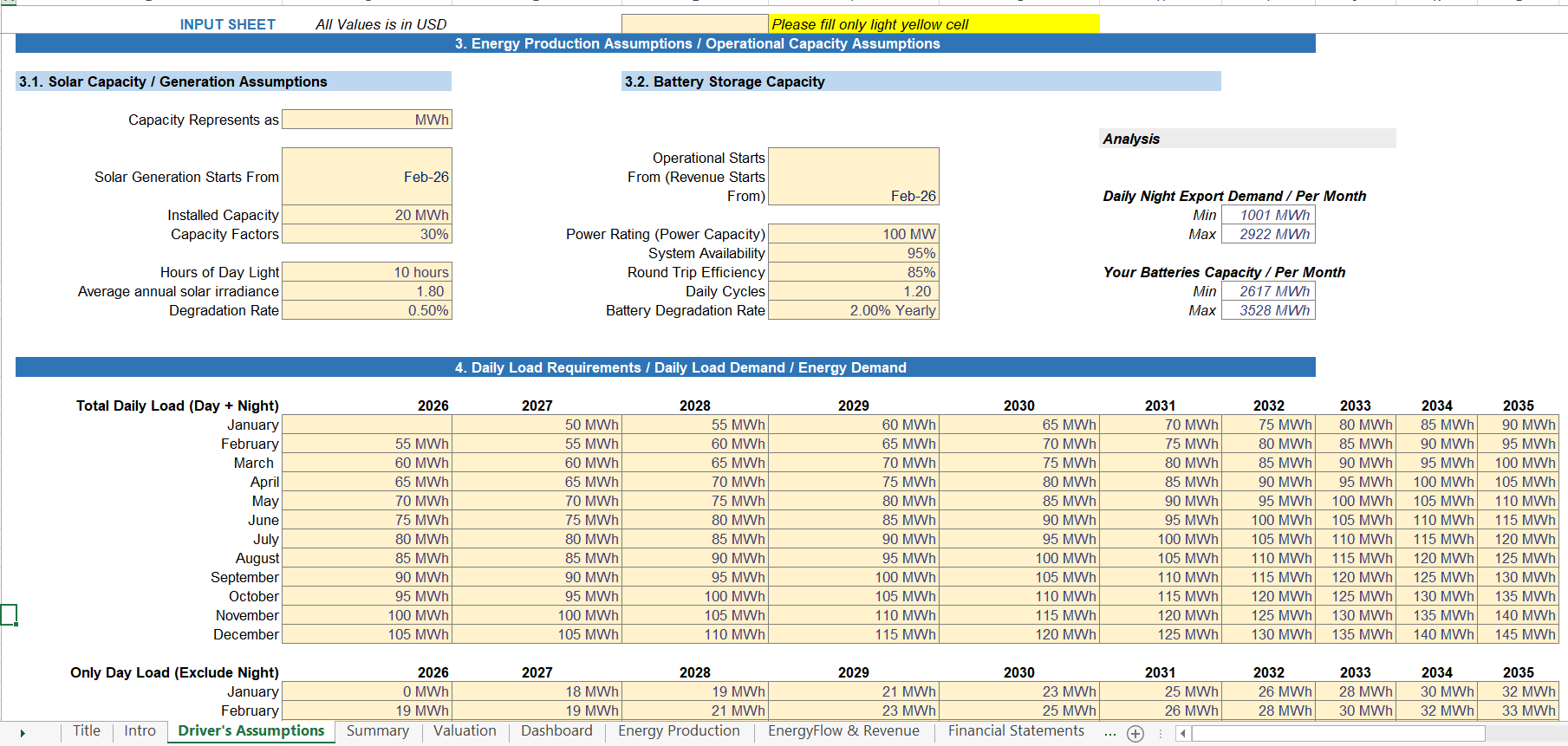
- Solar Farm Modelling — Full Lifecycle Coverage: Model your solar farm across its complete lifetime with inputs for installed capacity (in MWh or MW), capacity factor, daily sunlight hours, average annual irradiance, and annual panel degradation rate. Solar output is projected month-by-month, revealing exactly how much energy is available for self-consumption, battery charging, and grid export.
- Advanced Battery Capacity & Degradation Modelling: Include multiple BESS units to expand capacity over time or replace degraded batteries. Model battery degradation using up to 8 distinct methodologies — from simple annual percentage fade to detailed cycle-based degradation — giving you an accurate picture of how capacity loss affects revenue and lifetime over 10 years.
- Flexible Battery Charge / Discharge Strategy: Choose exactly when and how your battery charges and discharges. Model three distinct operating modes: (1) charging only from excess solar PV production, (2) charging from the full solar output, or (3) buying electricity from the grid at off-peak prices to sell at peak tariffs for arbitrage profit. The model calculates the resulting Equivalent Full Cycles (EFC) — critical for accurate battery lifetime and replacement cost forecasting.
- Battery Maximum & Minimum Depth of Discharge: Model real-world operating constraints recommended by battery manufacturers — such as discharging only to 20% State of Charge (SoC) rather than full depth of discharge — and see the exact impact on usable capacity, revenue, and battery longevity.
- Battery Reserve — Monetize Your Reserve Capacity: Model the option to sell your battery’s reserve capacity as an emergency power unit to third parties or retain it for self-use. The model calculates the revenue impact of this additional monetization stream separately.
- Electricity Consumption Modelling: Define your daily and nightly load requirements by month across the full 10-year horizon. The model automatically determines what portion of demand is met by solar, what is covered by battery discharge, and what must be imported from the grid — establishing your baseline electricity cost savings.
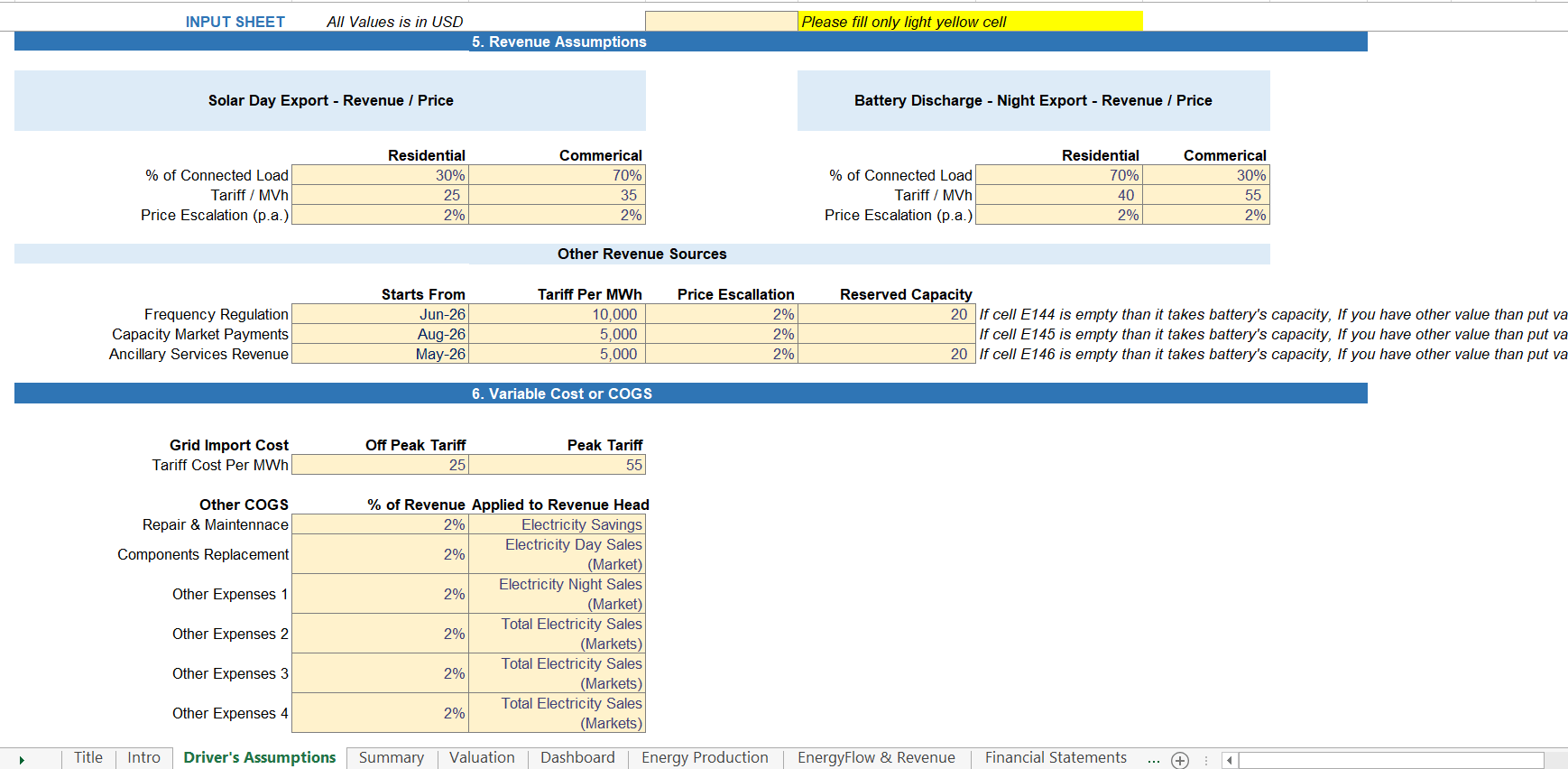
- Electricity Price Framework — Capture Long-Term & Short-Term Trends: Model separate off-peak and peak tariffs for residential and commercial customers, with annual price escalation rates. Apply different assumptions for electricity purchase and electricity sales prices to accurately model the price arbitrage spread and your Power Purchase Agreement (PPA) revenue.
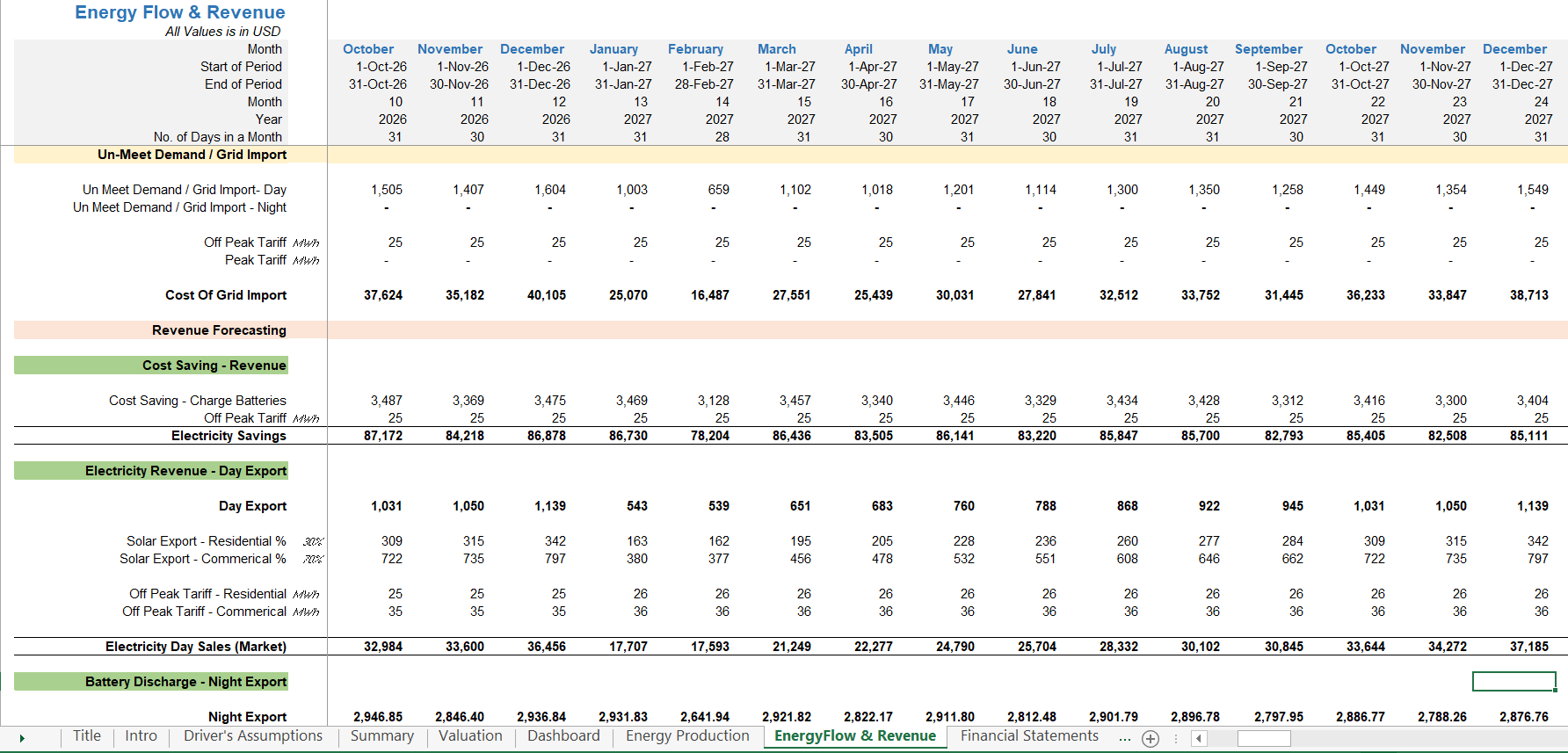
- Multiple Revenue Streams — Fully Modelled: The model captures every revenue source of a Solar + BESS project: electricity cost savings (self-consumption), daytime solar export at market rates or PPA tariffs, nighttime battery discharge export at peak tariffs, Frequency Regulation revenue, Capacity Market Payments, Ancillary Services Revenue, Renewable Energy Certificate (REC) revenue, and Battery Reserve sales — all with individual start dates and annual price escalation inputs.
- CAPEX — Separate Solar & BESS Asset Schedules: Model Solar CAPEX and Battery CAPEX completely separately, each with up to 12 asset line items covering purchase month, cost, useful life, and salvage value percentage. Automatically generates depreciation schedules and links to all three financial statements.
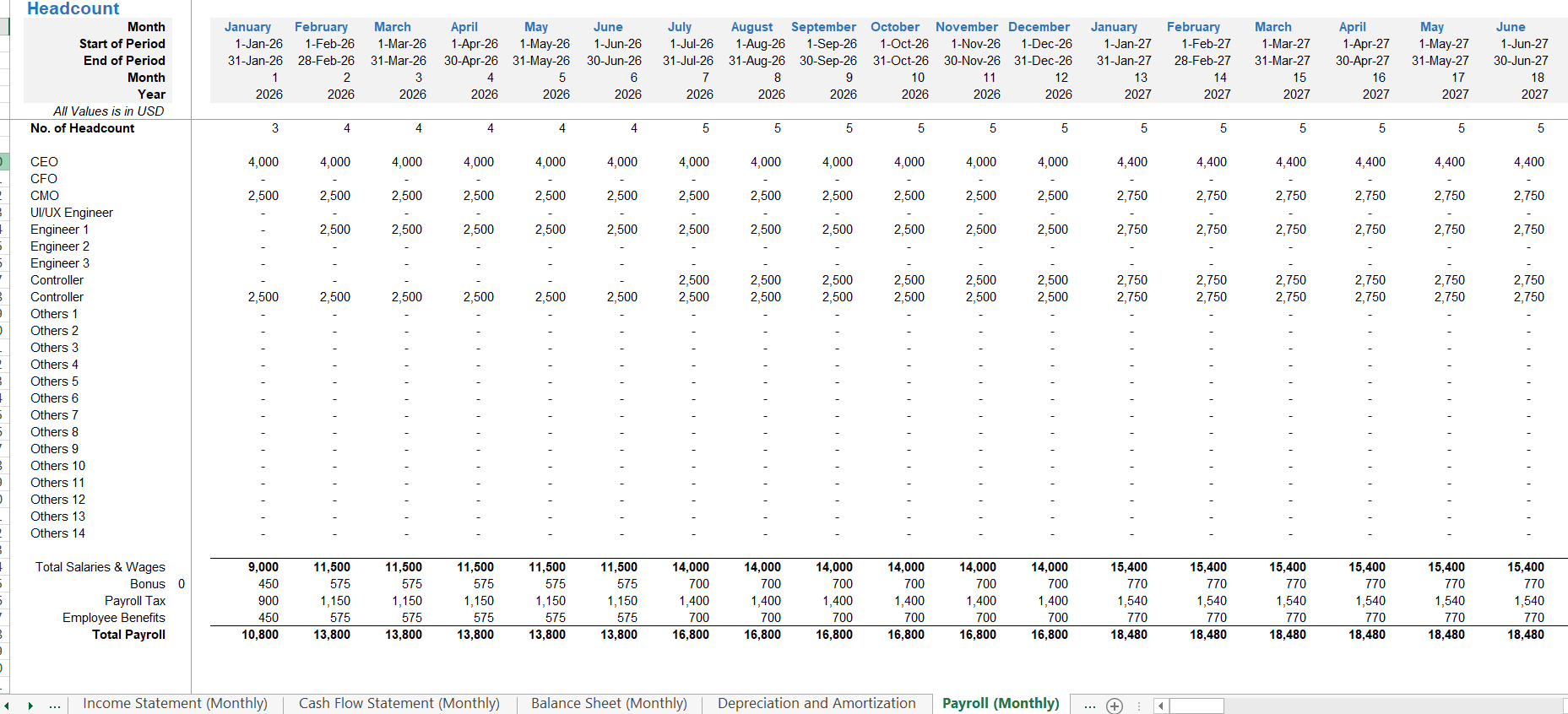
- Headcount & Payroll Planning: Plan your operational team with up to 30 roles — including hire date, annual salary, annual increment %, bonus %, payroll tax %, and employee benefits — all auto-linked to your monthly income statement.
- Operating Expenses with Inflation Escalation: Model 16 operating expense categories — Rent, Maintenance, IT Support, Insurance, Utilities, Legal, Accounting, and more — each with an individual start year, annual cost, and annual percentage increase for inflation modelling.
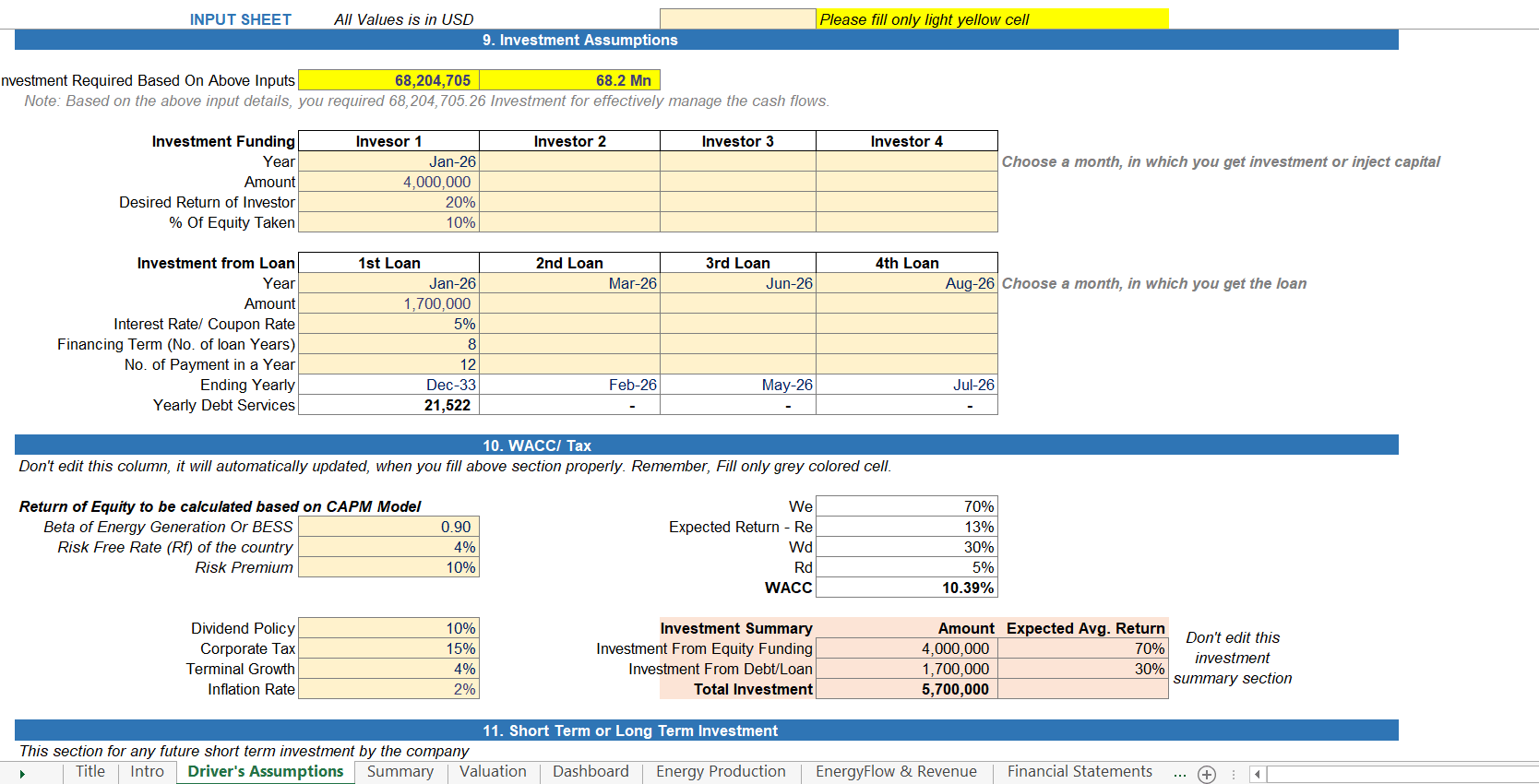
- Debt & Equity Financing — Full Capital Stack: Model up to 4 equity investors (with equity %, desired return, and investment month) and up to 4 debt facilities (loan amount, interest rate, term, and payment frequency). WACC is auto-calculated using the CAPM model based on your inputs. Full loan amortization schedules are generated automatically.
- Short-Term Investment Modelling: Model excess cash deployed into short-term investments — with investment type, amount, and timing — to reflect realistic treasury management and maximize returns on idle capital.
- Scenario Analysis via On/Off Switches: Toggle the Solar PV block and/or the BESS block independently to model Solar-only, BESS-only, or combined scenarios. Compare the financial outcome of each configuration instantly — without rebuilding the model.
- Investor Cash Flow Projections: The model projects cash flows specifically to equity investors — including return multiples, IRR per investor, and post-money valuation — giving you a clear picture of what each investor earns and when they can expect to exit.
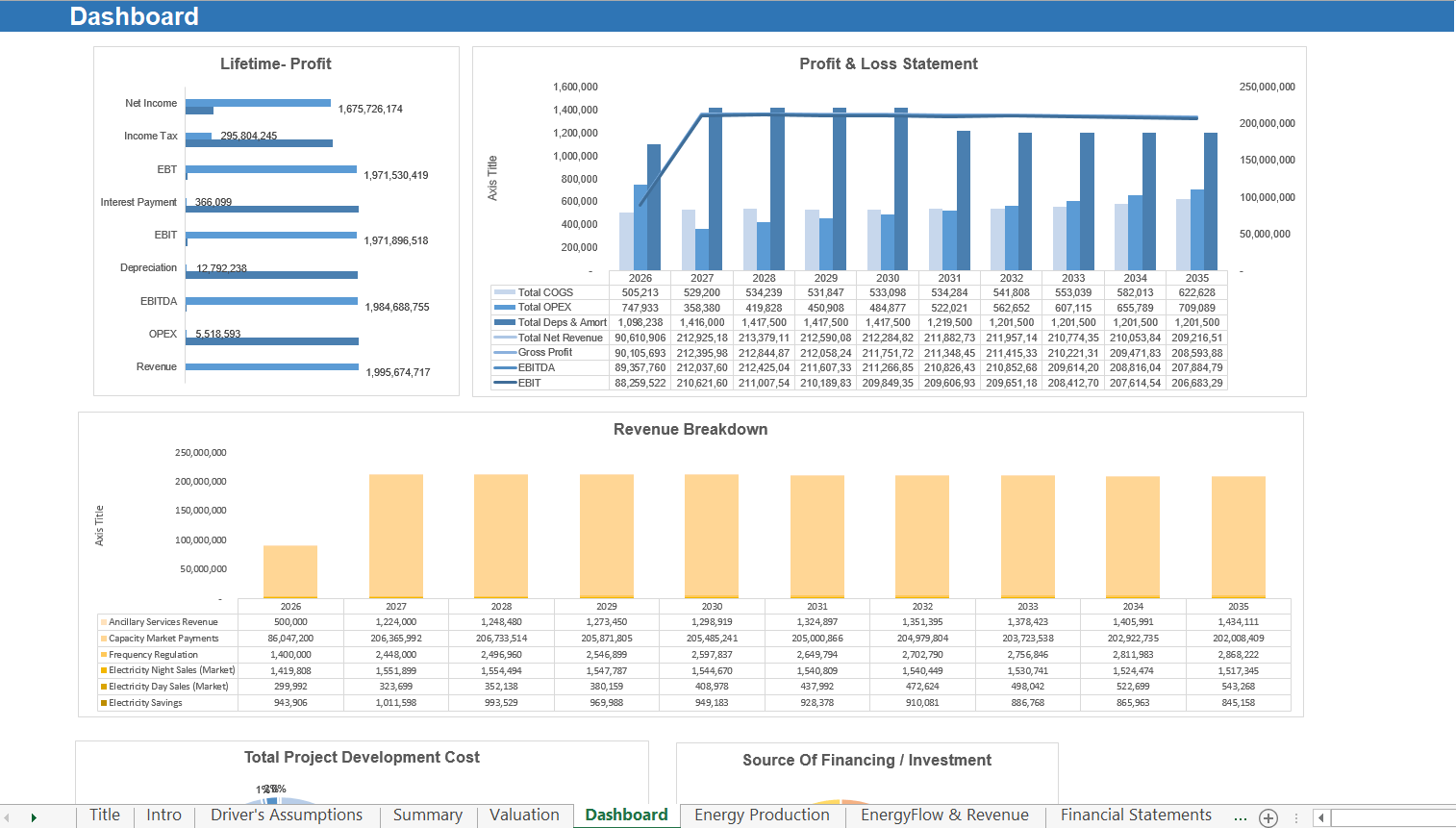
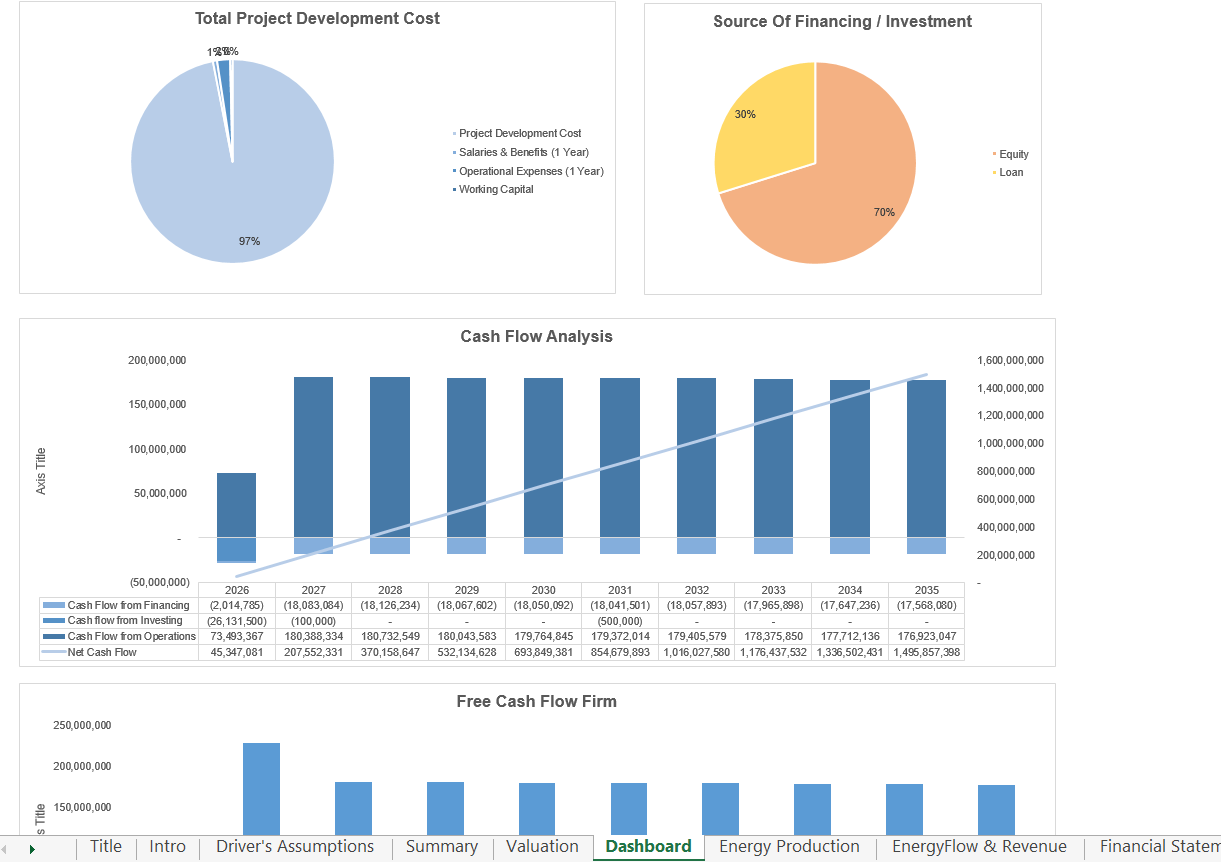
- Professional Reporting — Presentation Ready: The template includes an Executive Summary tab, a detailed financial Summary tab, a visual Dashboard with charts, and structured output tabs for each financial statement — ready to present to banks, infrastructure funds, energy investors, or your board without additional formatting.
16 Fully Integrated Tabs — What's Inside
|
|
Title | Branded project cover page and navigation guide |
Intro / Instructions | Step-by-step guide to using all inputs and outputs |
Driver’s Assumptions | Central input hub — fill grey cells only; everything else auto-calculates |
Assumptions Data Set | Internal data set layer linking inputs to all projection tabs |
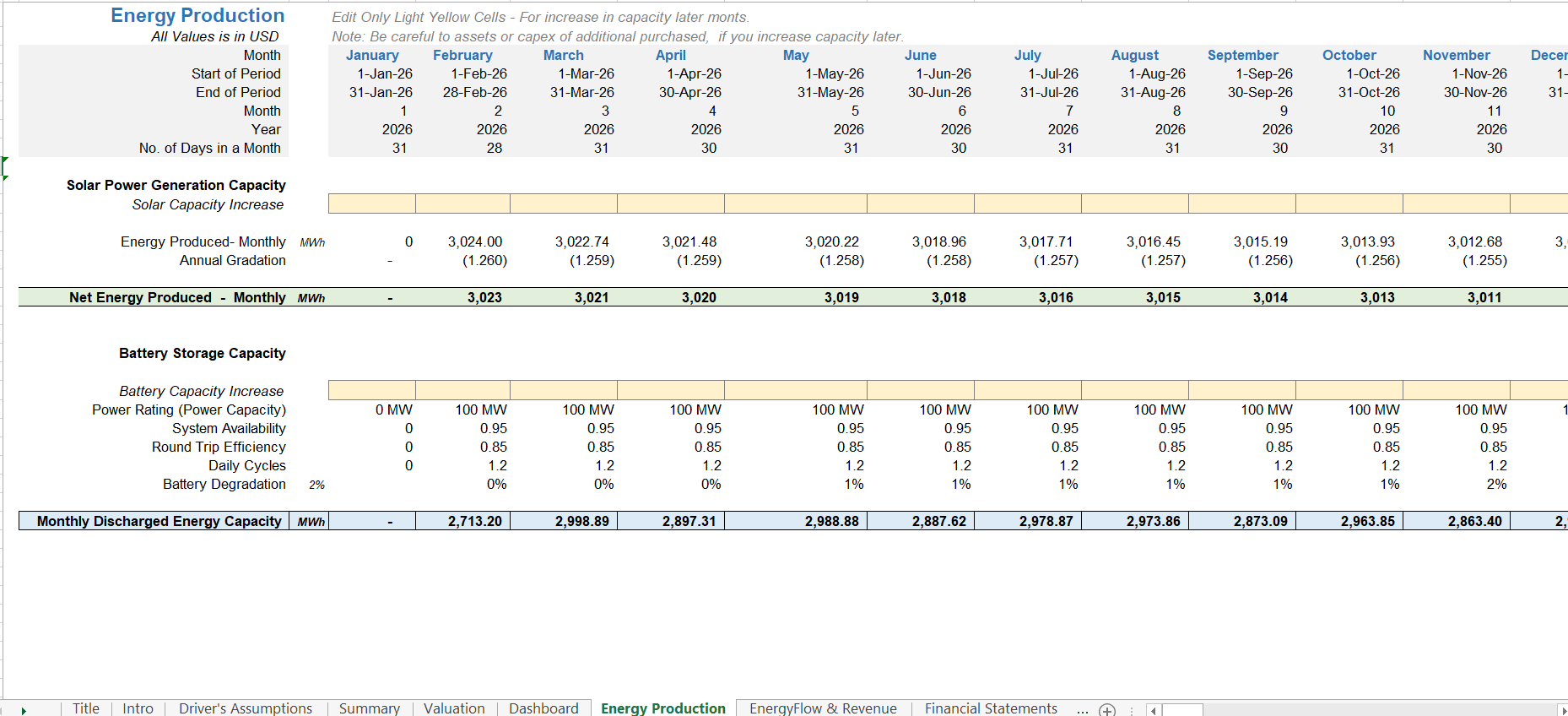
Energy Production | Monthly solar PV output, battery capacity, degradation, and available discharge energy |
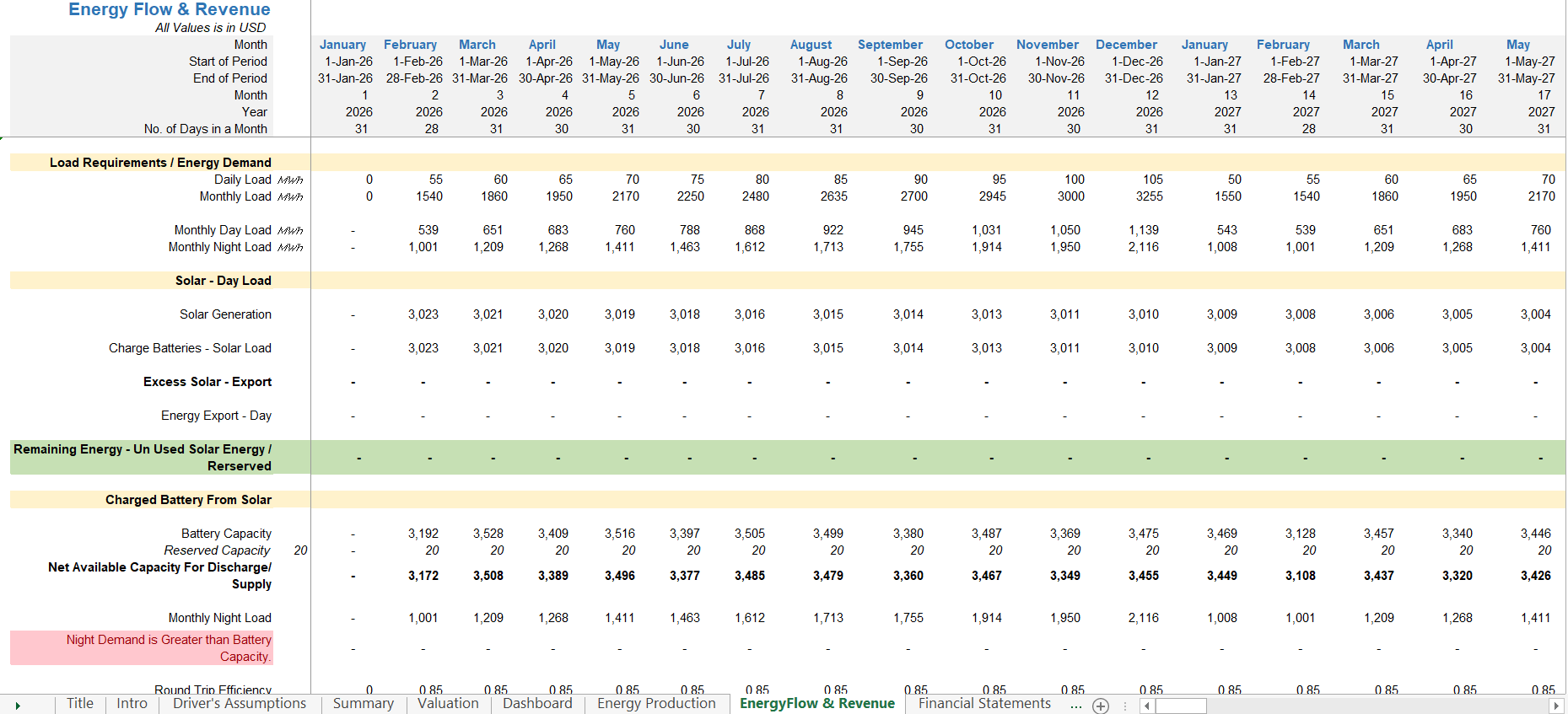
Energy Dispatch & Revenue | Hourly-informed energy flow: self-consumption, battery charge/discharge, grid import/export, and revenue per stream |
Income Statement (Monthly) | Month-by-month P&L: revenue, COGS, gross profit, OPEX, EBITDA, depreciation, EBIT, interest, tax, net income |
Cash Flow Statement (Monthly) | Operating, investing, and financing cash flows — with free cash flow and ending cash balance per month |
Balance Sheet (Monthly) | Fixed assets, current assets, liabilities, and equity — fully balanced every month |
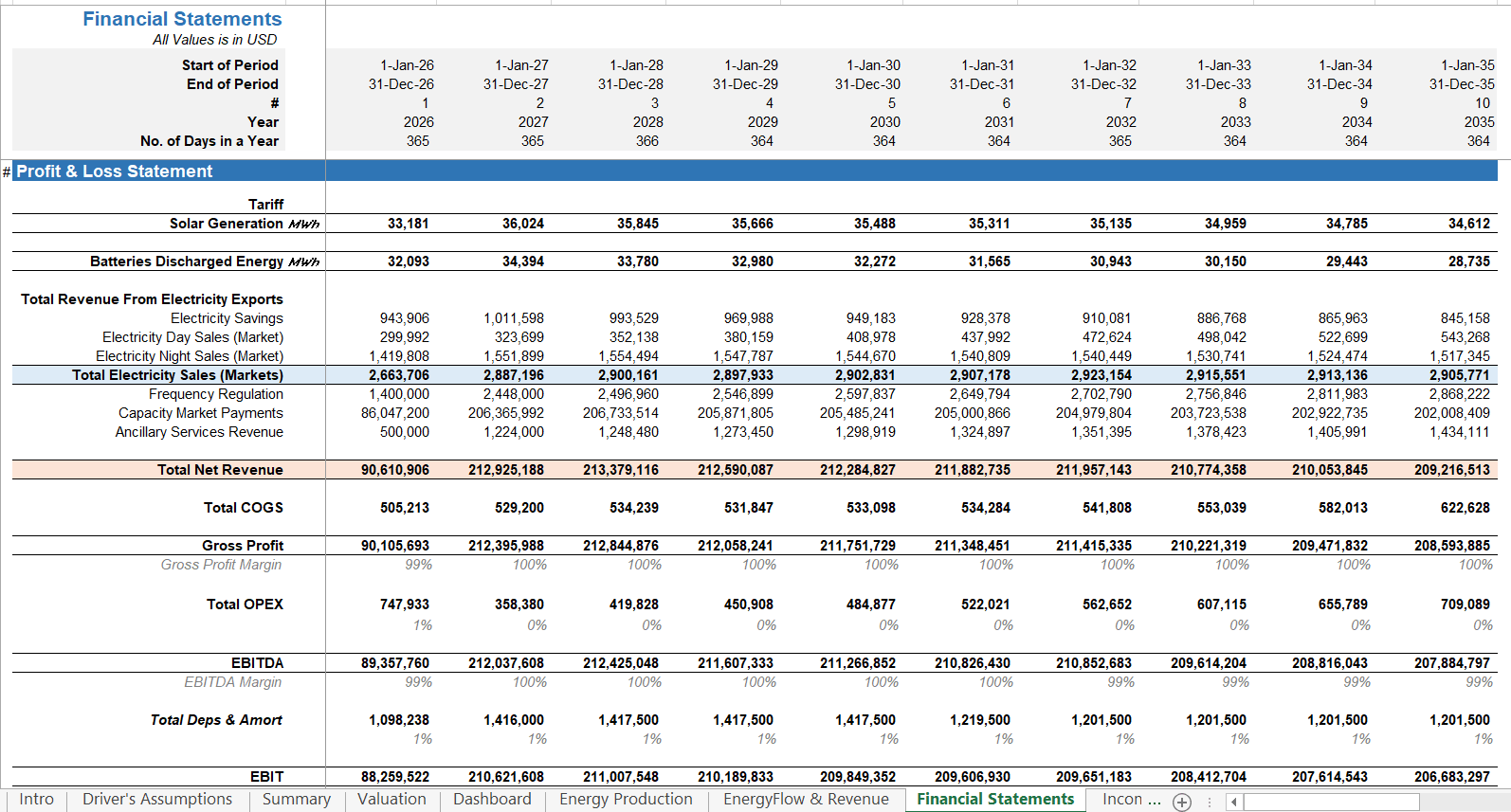
Financial Statements (Annual) | Annual summary of all three financial statements for quick review and investor sharing |
Valuation | DCF valuation, Revenue & EBITDA multiples, IRR, NPV, ROIC, ROE, DSCR, and Burn Rate analysis |
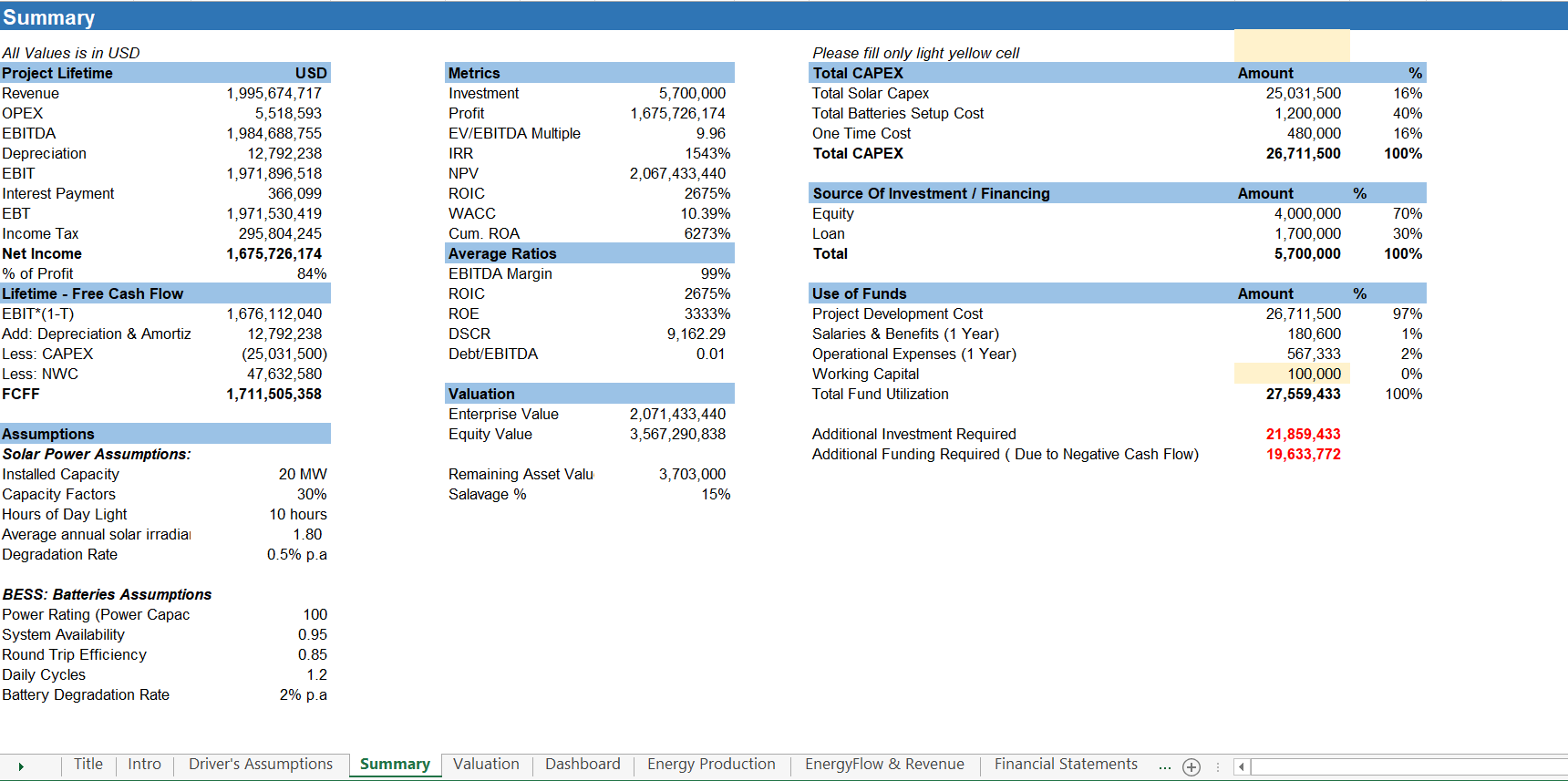
Summary | Executive summary of project lifetime metrics: total revenue, EBITDA, net income, CAPEX, IRR, NPV |
Dashboard | Visual charts and graphs for investor presentations and project reporting |
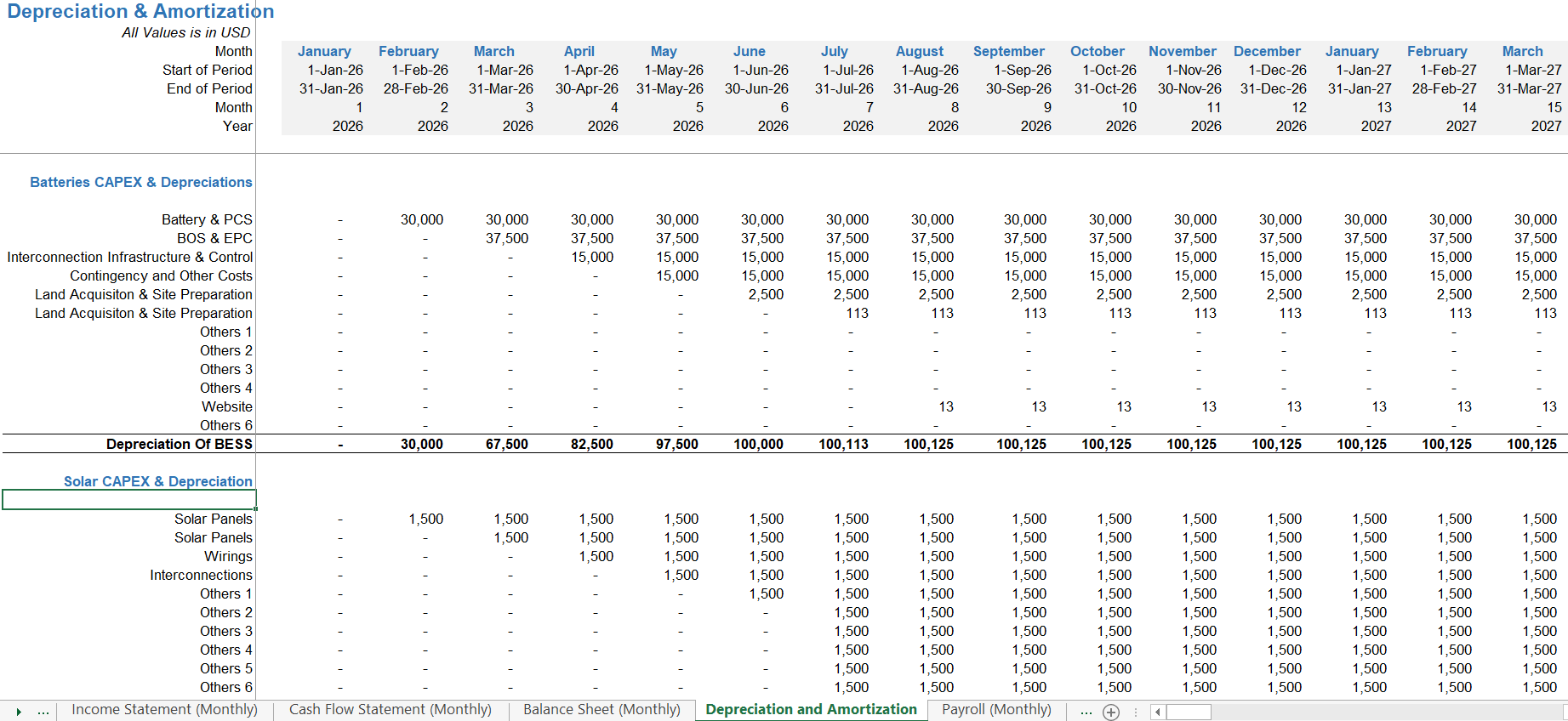
Depreciation & Amortization | Straight-line depreciation schedule for all Solar and BESS fixed assets |
Payroll (Monthly) | Monthly payroll tracker for all headcount roles with salaries and increments |
Loan Amortization | Monthly debt service schedule for up to 4 loan facilities |
Why Choose This Solar + BESS Financial Projection Model ?
Don’t waste weeks building a complex financial model from scratch. Our pre-built Solar BESS Financial Spreadsheet Template provides a robust, ready-to-use framework meticulously crafted to capture the unique technical and financial complexities of a combined Solar PV + Battery Energy Storage project.
- Purpose-built for Solar + BESS projects — not a generic energy or infrastructure template
- Separate Solar CAPEX and BESS CAPEX modelling with independent asset schedules and depreciation
- 7 distinct revenue streams modelled independently — from self-consumption savings to ancillary services
- Up to 8 battery degradation modelling methods — the most sophisticated BESS degradation framework available
- Three battery operating modes: excess solar only, full solar output, or grid arbitrage charging
- Full energy dispatch model: monthly solar generation, battery charge/discharge, and grid import/export
- Project finance-grade DSCR, IRR, NPV, and DCF outputs — the metrics banks and infrastructure funds require
- Fully unlocked Excel file — no password protection; modify any formula, tab, or layout
- Suitable for projects from development stage through to operational financial reporting
- Free email support and error correction included — from ExcelBusinessResource.com
💡Optimize the Design & Size of Your Solar + BESS Project · Evaluate Different Operating & Dispatch Scenarios · Prepare a Comprehensive, Bankable Financial Forecast · Present with Confidence to Investors & Lenders.
Do I need advanced Excel or energy finance expertise to use this model?
No. The model is designed to be immediately usable by developers, consultants, and investors without deep financial modelling skills. You only fill in the clearly marked grey cells on the Driver’s Assumptions Sheet. All energy calculations, financial statements, and valuation outputs are automatically generated from your inputs.
What project sizes and types does this model support?
The model is flexible enough to support small commercial rooftop Solar + BESS installations through to large-scale utility Solar farms with industrial-grade battery storage. You can input any installed capacity (in MWh or MW), and the model scales all energy production, revenue, and cost projections accordingly.
How does the model handle battery degradation?
The model includes up to 8 different methodologies for modelling battery capacity degradation over time — from simple annual percentage fade to more detailed cycle-based approaches. You can select the degradation method that best matches your battery supplier’s specifications or your project’s technical assumptions, and the model will accurately project usable capacity loss, its impact on revenue, and when battery replacement becomes financially necessary.
Can I model electricity price arbitrage — buying from the grid at low prices to sell at high prices?
Yes. One of the three battery operating modes allows you to charge the battery by purchasing electricity from the grid at off-peak tariff rates, then discharge and sell at peak tariff rates. The model calculates the resulting arbitrage margin, Equivalent Full Cycles (EFC), and the net financial impact of this strategy versus other operating modes.
What revenue streams does the model support?
The model supports seven distinct revenue streams: (1) electricity cost savings from self-consumption, (2) daytime solar export at market/PPA rates, (3) nighttime battery discharge export at peak tariffs, (4) Frequency Regulation revenue, (5) Capacity Market Payments, (6) Ancillary Services Revenue, and (7) Battery Reserve sales to third parties. Each stream has its own configurable start date, pricing, and annual escalation rate.
Is this model suitable for project finance / bank lending presentations?
Yes. The model outputs the financial metrics that project finance banks specifically require: DSCR (Debt Service Coverage Ratio), loan amortization schedules, free cash flow to firm (FCFF), sensitivity analysis, and a full 3-statement financial model. These are the standard outputs required to support a project finance debt application for a Solar + BESS facility.
Can I model both equity and debt funding for my Solar + BESS project?
Yes. The model supports up to 4 equity investors (each with equity %, desired return, and investment month) and up to 4 debt facilities (loan amount, interest rate, financing term, and payment frequency). WACC is automatically calculated using the CAPM model based on these inputs, and full loan amortization schedules are generated for each facility.
What Our Clients Say





Frequently Asked Questions
Everything you need to know about our projection templates.
Our Financial Modeling & Budgeting Services includes;
Customized Spreadsheets
Tailored to met your unique financial needs.
Comprehensive Training
Empowering you to use models effectively.
Accurate Projections
Make informed decisions with confidence.
We prepare comprehensive business plan to launch and grow startup with;
Data-Driven Market Research
Detailed market analysis and SWOT insights
Business Model Canvas
Clear visualization of your business structure
Financial Projections
Valuation and forecasts to showcase your potential
Related products
-
Sale!

Battery As A Service (BaaS) Financial Model Template
$500.0Original price was: $500.0.$250.0Current price is: $250.0.