
A business plan for vertical farming is a comprehensive document that explains how your indoor farm will operate, generate revenue, and grow over time. It connects your idea with real-world execution by clearly defining your crops, target market, operational setup, and financial projections.
The business plan for vertical farming startup becomes especially important when you are seeking funding. Investors are not just investing in your idea they are investing in your ability to execute. Without a clear plan, even a strong concept can appear risky or unstructured.
More importantly, a business plan forces you to think through critical decisions. What crops will you grow? Who will buy them? How much will it cost to produce one kilogram of lettuce or any other crop? These are not assumptions they need data-backed answers.
What Investors Are Really Looking For In A Vertical Farming Startup?
When investors evaluate a startup vertical farming business, they are not just impressed by technology or sustainability claims. They are looking for a combination of scalability, profitability, and operational efficiency.
They want to see that your farming model can expand beyond one location without significantly increasing costs. They expect a clear understanding of your unit economics, meaning how much it costs you to grow and sell each product. They also look closely at your vertical farming business financial model, because numbers tell the real story.
If your projections are unrealistic or poorly structured, it immediately reduces trust. On the other hand, a solid financial forecasting model for vertical farming shows that you understand your business deeply and are prepared for real-world challenges.
Why Is a Vertical Farming Business Plan Essential for Your Success?
Many founders skip proper planning and that’s where most startups fail.
Here’s why your plan matters:
- Investor Confidence: Investors want data, not ideas
- Clear Strategy: Helps you define crops, pricing, and market positioning
- Operational Clarity: Avoid costly mistakes in tech and setup
- Financial Control: Tracks costs, revenue, and profitability
- Mitigate Risk: By mapping out your technology and crop cycles early, you identify potential bottlenecks.
- Set Milestones: It defines what success looks like in month 6, year 2, and year 5.
Without a plan, even the best vertical farming idea can collapse.
What are Investors Looking for in an Indoor Farm?
When an investor looks at a vertical farming business plan, they aren’t just looking for green ideas. They are looking for a sustainable path to profitability. They specifically want to see:
- Energy Efficiency: How will you manage the high cost of LED lighting and HVAC?
- Scalability: Can your model be replicated in other cities?
- Market Demand: Have you already secured off-take agreements (contracts with local grocers or restaurants)?
- Expertise: Does your team understand both the biology of plants and the technology of the hardware?
How to Structure a Vertical Farming Business Plan
Let’s build your plan step by step.
Step 1: Crafting a High-Impact Executive Summary
The executive summary is your elevator pitch on paper. If an investor only reads these two pages, they should know exactly why your startup will win.
Introduction to the Business
Clearly state your mission. Are you providing hyper-local greens to urban food deserts, or are you growing high-value medicinal herbs? Define your “Why.”
The Market Opportunity
Vertical farming is solving a massive problem: the fragility of traditional supply chains. Use data to show the growth of the local food movement and the increasing costs of climate-impacted traditional farming.
Products and Services
Don’t just say vegetables. List your specific crops microgreens, basil, strawberries, or kale. Mention if you offer subscription boxes, wholesale to supermarkets, or direct-to-consumer sales.
Financial Highlights
Give a snapshot of your projected revenue and break-even point. This is where a professional Vertical farming Business Financial Model becomes indispensable to show you’ve done the math.
Step 2: How Do You Define Your Vertical Farming Market Position?
You cannot be everything to everyone. Your market position defines your brand.
Who is Your Target Customer?
Are you selling to high-end chefs who need year-round consistency? Or are you selling to eco-conscious families at a local farmer’s market? Identifying your Avatar helps you tailor your packaging, pricing, and marketing.
Competitive Analysis
Don’t ignore the grocery store. Your competition isn’t just other vertical farms; it’s the cheap lettuce shipped from 2,000 miles away. Explain why your “harvested today, on your plate today” model justifies a premium price.
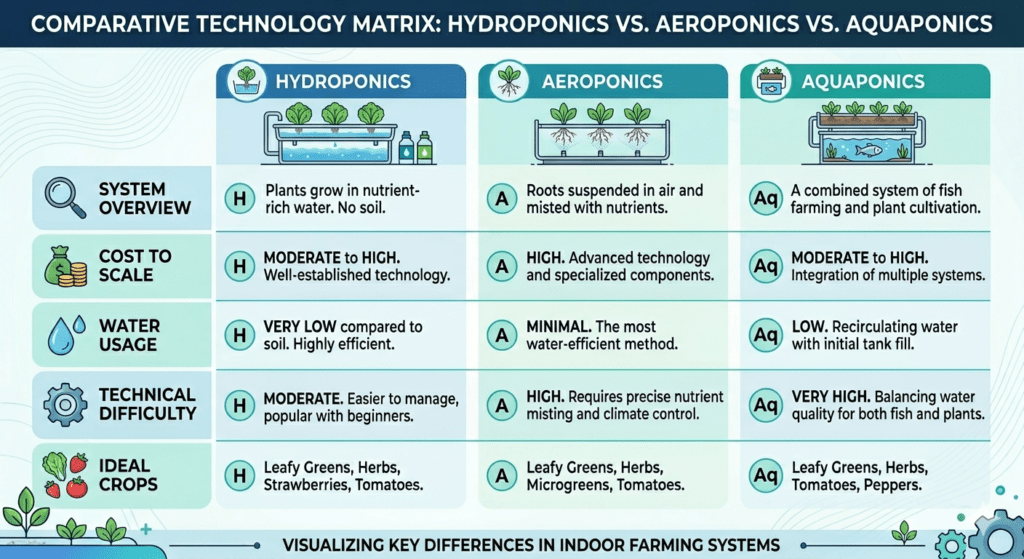
Step 3: Mapping the Technology: Hydroponics, Aeroponics, or Aquaponics?
Your choice of technology is the engine of your business. Each has different costs and yields.
- Hydroponics: Growing plants in nutrient-rich water. It’s the most common and often the easiest to scale.
- Aeroponics: Mist-based systems that use even less water but require more technical precision.
- Aquaponics: A symbiotic system with fish. It’s complex but offers a unique closed-loop marketing story.
Your plan must justify why you chose one over the others based on your target crops and budget.
Step 4: Marketing & Sales Strategy
How will people find out you exist?
- Local Partnerships: Partnering with local farm-to-table restaurants.
- Digital Presence: Using SEO and social media to show behind-the-scenes footage of your clean growing environment.
- B2B vs. B2C: Will you sell in bulk (lower price, higher volume) or directly to consumers (higher price, more logistics)?
Step 5: Building the Operational Plan
The Operational Plan is the heart of your daily farm life. Investors need to see that you aren’t just a tech enthusiast, but a disciplined operator. This section should answer: How does the farm run when the lights turn on?
- Crop Cycles & Scheduling: Outline the timeline from seeding to germination, transplanting, and final harvest. Consistency is key in vertical farming to keep your retail partners happy.
- Labor Requirements: Vertical farms are tech-heavy but still require human hands for harvesting and packing. Detail your staffing needs for growers, technicians, and delivery drivers.
- Maintenance Protocols: LED lights burn out, and hydroponic pumps can clog. Your operational plan must include a preventative maintenance schedule to ensure 24/7 uptime.
- Inventory Management: How will you track seeds, nutrients, and packaging materials? Efficiency here directly impacts your Vertical farming Business Financial Model.
Step 6: Assembling a Winning Management Team
In the world of startup vertical farming, investors often bet on the jockey, not the horse. Your Management Team section must prove you have the “EEAT” (Experience, Expertise, Authoritativeness, and Trustworthiness) to succeed.
- The Core Founders: Highlight your background in business, agriculture, or engineering. If you are a first-time founder, emphasize your ability to execute and learn.
- Key Hires: Do you have a Head Grower with a background in plant physiology? Do you have an operations Manager who understands supply chains?
- Advisory Board: If your team is small, mention your advisors. Having a seasoned ag-tech mentor or a financial expert on your side adds immense credibility to your Vertical farming Business Plan.
- The “Skill Gap” Analysis: Be honest about what you are missing and how you plan to hire for those roles once you secure funding.
Step 7: Navigating Regulatory Compliance
You aren’t just running a tech company; you are running a food production facility. Regulatory Compliance is non-negotiable.
- Food Safety Standards: Detail your commitment to Good Agricultural Practices (GAP). Explain how your indoor environment reduces the risk of pathogens compared to traditional soil farming.
- Zoning and Permits: Vertical farms are often in urban areas. Ensure your business plan notes that you have checked local industrial or agricultural zoning laws.
- Certifications: Are you aiming for Certified Organic or Non-GMO? Clearly state these goals, as they affect your market price and customer trust.
- Health and Safety: Outline your protocols for worker safety, especially when dealing with high-voltage lighting systems or CO2 enrichment.
Step 8: Building a Robust Vertical Farming Business Financial Model
This is where many founders get stuck. A financial forecasting model for vertical farming must account for:
- Initial Setup: Lights, racks, sensors, and plumbing.
- Operating Costs: Seeds, nutrients, labor, and the big one electricity.
- Yield Projections: How many grams per square foot can you realistically produce?
Excel Business Resource are specialized in this. A generic startup financial model template often misses the nuances of crop cycles and shrinkage (wasted product). Our dedicated, custom build Vertical farming Financial Model is built specifically to handle these variables, providing you with investor-ready Pro-Forma statements, Cash Flow analysis, and Burn Rate calculations.
Conclusion
Starting an indoor farm is a bold step toward a more sustainable world. By focusing on a clear market position, choosing the right technology, and backing it all up with a rock-solid financial foundation, you position yourself at the forefront of the agricultural revolution.
Success in this industry isn’t just about having a green thumb; it’s about having a sharp business mind. When you align your vision with a professional vertical farming business plan, you aren’t just dreaming of a greener future you’re building the infrastructure to make it happen. Whether you are looking for a startup vertical farming guide or a detailed financial model template for vertical farming, the key is to start with data-driven planning.