
Most startups fail and most people blame the product. But after working with 100+ startups across 30+ industries, we’ve seen the real reason: founders fly blind. They launch, spend, and pitch investors without a clear financial picture. A financial model for startups is not a finance exercise. It is your decision-making engine.
In this guide, we’ll break down what a startup financial model actually is, why it matters more than your pitch deck, and how to build one that investors take seriously.
What Is a Financial Model for a Startup And Why Is It Different?
A financial model is a structured spreadsheet that projects your startup’s future revenue, expenses, cash flow, and profitability usually over 3 to 5 years. Think of it as a flight simulator for your business. You can test different scenarios before committing real money.
But a startup financial model is not the same as a corporate budget. Startups have no operating history. They rely on assumptions, market sizing, and growth hypotheses. That’s what makes startup financial modeling both challenging and critical.
A financial model answers the most important question any investor will ask: “How do you make money and when will you make enough of it?”
At Excel Business Resource, we’ve built investor-ready models for SaaS platforms, e-commerce brands, real estate ventures, restaurants, healthcare startups, and more. The structure differs by industry, but the core purpose is always the same: give stakeholders a clear, honest view of the financial future.
The 6 Core Components Every Startup Financial Model Must Include
A solid startup financial model is not just a revenue forecast slapped into a spreadsheet. Here’s what a complete, investor-grade model looks like:
1. Revenue Projections
This is the heart of your model. How will you generate revenue? Break it into streams subscription fees, product sales, licensing, services and build up assumptions from the bottom: price per unit × volume × growth rate. Avoid top-down guessing like “we’ll capture 1% of a $10B market.” Investors see through it immediately.
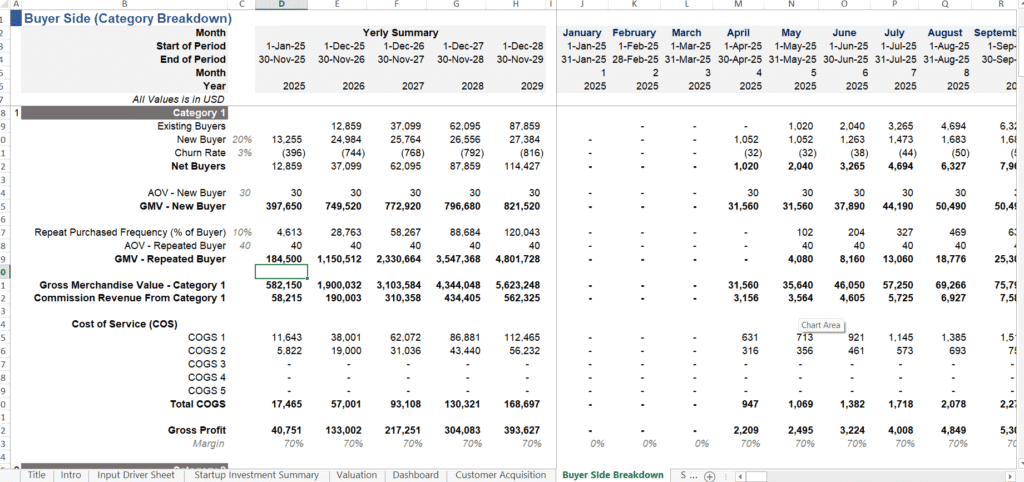
2. Cost of Goods Sold (COGS)
COGS are the direct costs tied to delivering your product or service — manufacturing, cloud hosting, fulfillment, or contractor costs. Understanding your gross margin is essential. A SaaS startup with 80% gross margins is a very different business from a hardware company at 30%.
3. Operating Expenses (OpEx)
These are your fixed and variable overheads: salaries, marketing spend, rent, software subscriptions, legal, and admin. Model these month-by-month in the early stages and quarterly thereafter. Most startups underestimate OpEx — we consistently see this in the models founders send us.
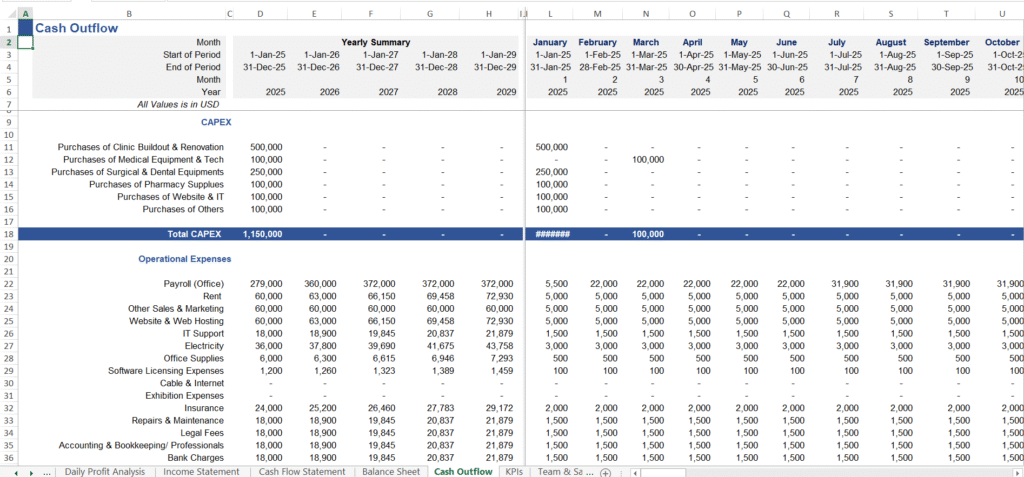
4. Three Financial Statements
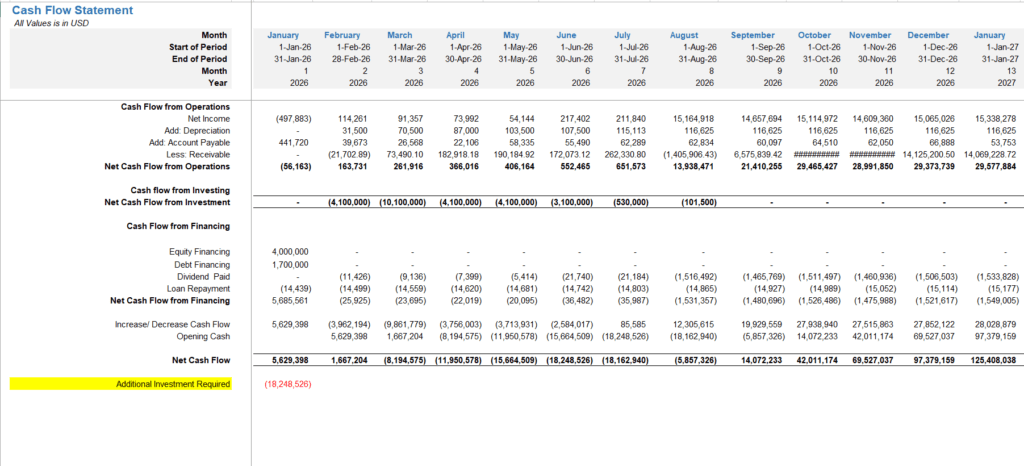
Every serious financial model includes the Income Statement (P&L), the Cash Flow Statement, and the Balance Sheet. These three are linked. Change one assumption and everything updates automatically. If your model doesn’t have this linkage, it’s not a model — it’s a guess.
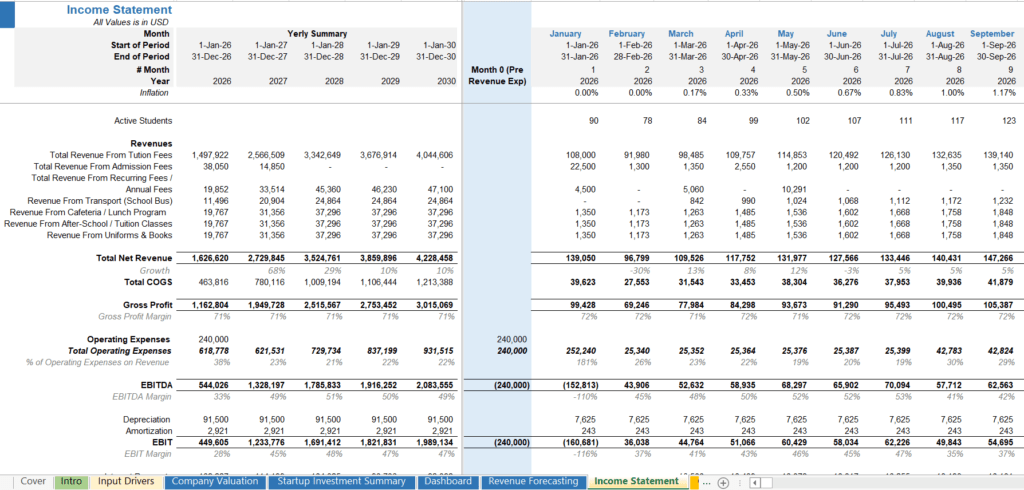
5. Cash Flow Projections
Profitability and cash flow are not the same thing. You can be profitable on paper and still run out of cash. Your model must show monthly cash inflows and outflows, your cash burn rate, and the exact month you’ll need your next funding round. This is the number VCs look at first.
6. KPIs and Scenario Analysis
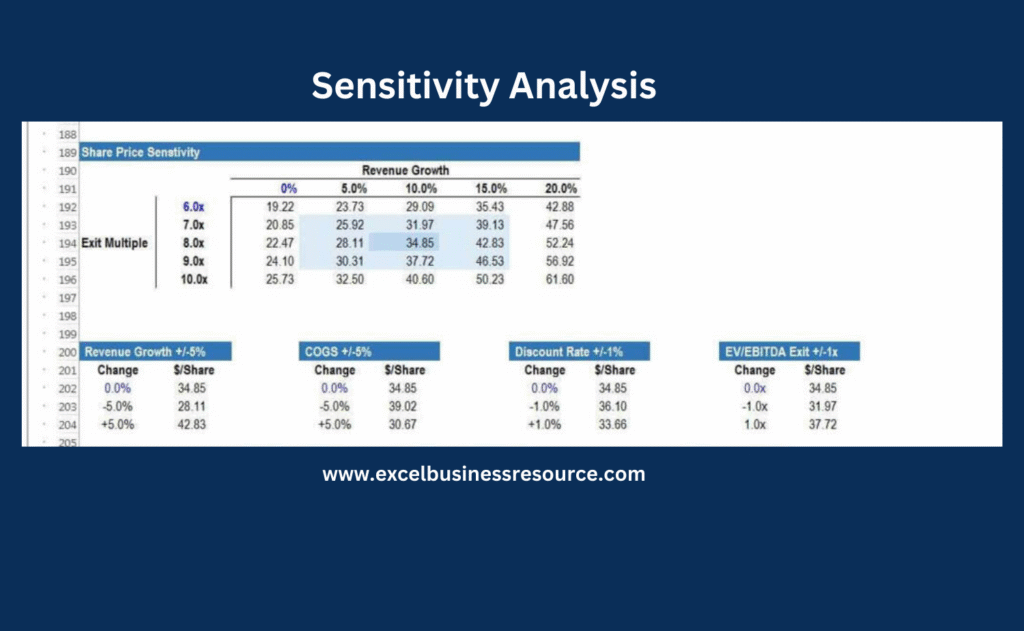
Key performance indicators like CAC (Customer Acquisition Cost), LTV (Lifetime Value), MRR (Monthly Recurring Revenue), and payback period tell investors how efficiently you grow. Scenario analysis — base case, bull case, bear case — shows you’ve stress-tested your assumptions. This is not optional if you’re raising capital.
5 Reasons a Financial Model Is Your Most Powerful Startup Tool
1. It Helps You Raise Funding — Faster
Investors don’t fund ideas. They fund businesses with a clear path to profitability. A well-built financial model tells the story of your startup in numbers. It shows investors that you understand your unit economics, your cash needs, and your growth levers. Our clients at Excel Business Resource have used our models to raise up to $2 million in investment.
2. It Forces You to Validate Your Business Model
Building a financial model forces hard questions: What’s your customer acquisition cost? How long until you break even? What happens if you lose your biggest client? These are questions you need to answer before investors ask them — or before the market forces the issue.
3. It Guides Every Major Decision
Should you hire two salespeople or invest in paid ads? Should you launch in a new market now or wait six months? A financial model lets you simulate these decisions before you make them. It turns gut-feel decisions into data-backed choices.
4. It Keeps Your Burn Rate in Check
Startup failure is often silent. Cash disappears slowly, then suddenly. A monthly financial model tracks your burn rate and runway — the number of months before you run out of money. Knowing this number is not pessimistic. It is survival intelligence.
5. It Makes You a Better Founder
Founders who understand their financials negotiate better, hire smarter, and grow faster. Financial modeling is not a finance team’s job in the early stages — it is a founder skill. The sooner you build this muscle, the more control you have over your startup’s direction.
What Type of Financial Model Does Your Startup Actually Need?
Not all startups are alike, and neither are their financial models. The revenue mechanics, cost structure, and key assumptions vary significantly by business type. Here are the most common models we build:
- SaaS Financial Model: Built around MRR, ARR, churn rate, CAC, LTV, and customer cohorts. This is one of the most complex models but also the most investor-friendly.
- E-Commerce Financial Model: Covers average order value, conversion rates, website traffic, inventory, and fulfillment costs. Seasonal trends are critical to model here.
- Real Estate Financial Model: Incorporates property acquisition, rental income, NOI, cap rates, and debt service. Essential for investors and developers.
- Restaurant Financial Model: Models table turns, average spend, food cost percentage, labor costs, and location economics.
- Healthcare Financial Model: Tracks patient volumes, reimbursement rates, staffing, and compliance costs.
Agriculture Business Financial Model: Models crop yields, cultivated acreage, commodity prices, input costs (seeds, fertilizers, pesticides), labor expenses, and seasonal harvest cycles. Critical for assessing profitability, cash flow, and production efficiency.
Manufacturing Business Financial Model: Tracks production capacity, raw material costs, labor costs, machine utilization, inventory levels, and operating expenses. Essential for analyzing margins, production efficiency, and capital investment requirements.
Services Business Financial Model: Focuses on billable hours, client acquisition, project revenue, employee utilization rates, staffing costs, and recurring service contracts. Helps evaluate scalability, profitability, and workforce productivity.
Retail Business Financial Model: Incorporates store traffic, conversion rates, average transaction value, inventory turnover, gross margins, and operating expenses. Important for forecasting sales performance, inventory management, and store profitability.
Using a generic financial model template for a SaaS startup is like wearing the wrong prescription glasses — it technically works but gives you a distorted picture. Industry-specific models exist for a reason.
What Investors Actually Look for in a Startup Financial Model
We’ve reviewed hundreds of investor conversations across our client engagements. Here’s what separates models that get funded from those that get ignored:
- Grounded Assumptions: Numbers that can be traced back to real data — market research, competitor benchmarks, pilot results. Not wishful thinking.
- Granular Projections: Month-by-month for Year 1, quarterly for Year 2–3. Granularity shows you’ve thought through the details.
- Unit Economics: How your CAC trends as you scale. How churn impacts LTV. This shows financial sophistication.
- Sensitivity to Risk: No startup hits its base case perfectly. Show investors what happens in downside scenarios — and that you’ve planned for it.
- Clean Structure and Design: A model that is easy to read, logically structured, and free of broken formulas. Presentation matters more than most founders think.
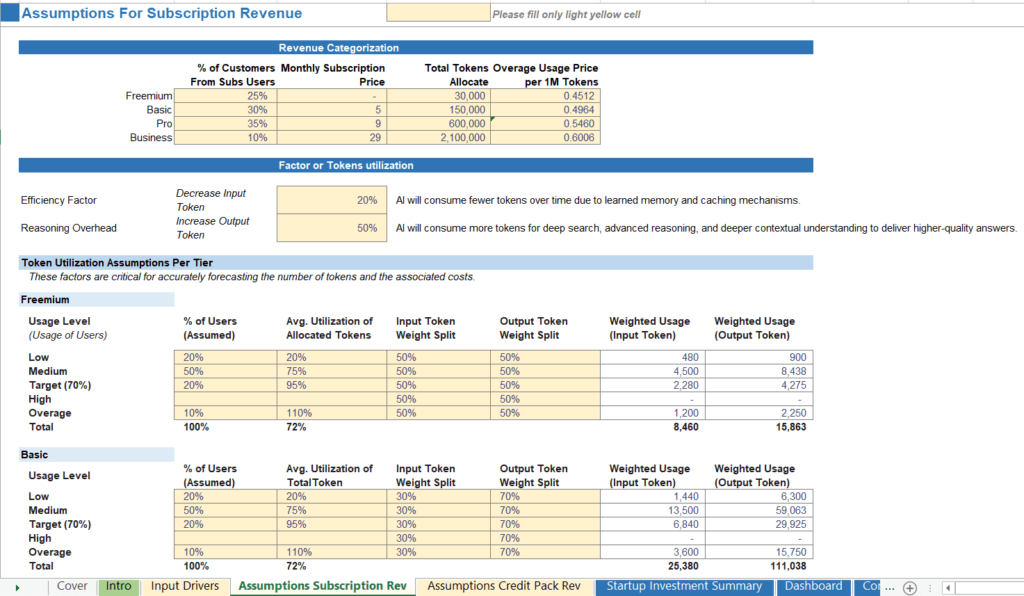
One mistake we see repeatedly: founders over-inflate revenue in Year 3 to make the model look attractive. Experienced investors discount this immediately. Honest projections with clear reasoning beat hockey-stick fantasies every time.
How to Build a Startup Financial Model: A Practical Starting Point
You don’t need to be a financial analyst to build a working model. Here’s a simplified process:
- Step 1: Define the Purpose: What do you want this model to achieve? Fundraising? Internal planning? Bank loan? The purpose shapes the structure.
- Step 2: Map Your Business Model: List every revenue stream and every cost category. Start simple.
- Step 3: Build Revenue Projections: Build your revenue forecast from the bottom up. How many customers × how much × how often?
- Step 4: Forecast Your Costs: Model your COGS and OpEx month by month for Year 1.
- Step 5: Build the Three Statements: Link your P&L, cash flow statement, and balance sheet together.
- Step 6: Add KPIs and Scenarios: Add your KPIs dashboard and scenario toggles.
- Step 7: Stress Test: Does the model behave logically when you change assumptions? Test edge cases.
If this feels overwhelming, you don’t need to build from scratch. At Excel Business Resource, we offer industry-specific financial model templates that are pre-built, fully linked, and customizable — so you can plug in your numbers and get investor-ready projections in hours, not weeks.
Why Trust Excel Business Resource on Financial Modeling?
We are not a content farm or a software company that has never built a real financial model. Excel Business Resource was founded by Hammad Hasan (FMVA, MBA Finance) with 7+ years of hands-on experience in financial modeling, FP&A, and valuation for startups and SMEs globally.
We have delivered 100+ investor-ready financial models across 30+ industries from SaaS platforms in Silicon Valley to restaurant chains in the Middle East and renewable energy projects in South Asia. Our clients have raised up to $2 million in investment using models we built.
When we write about financial modeling, it comes from real projects, real investor feedback, and real startup challenges not textbooks.
Ready to Build Your Startup's Financial Model?
Whether you’re preparing for a seed round, planning your next 12 months, or simply trying to understand your own numbers, a financial model is the most important document your startup can have.
Explore our ready-to-use financial model templates built for your specific industry, or reach out to our team for a custom model tailored to your startup’s unique business model and growth stage.
Stop guessing. Start modeling. Your next investor meeting depends on it.