
Opening a grocery store is one of the safest bets in retail. People buy food every single week, no matter what the economy is doing. But before you sign a lease or order your first pallet of stock, you need one number: the real cost to start a grocery store.
This guide gives you that number. You will get a full cost breakdown, real operating expenses, and an honest timeline for when your store actually turns a profit.
What Does It Cost to Open a Grocery Store Business?
The cost to open a grocery store business varies widely based on store size, location, and format. Here’s what the data shows:
- Small neighborhood grocery or mini-market: $20,000 – $80,000
- Mid-size independent grocery store: $80,000 – $300,000
- Full-scale supermarket: $300,000 – $1,000,000+
depends on what type of grocery shop types, for instance;
- Small Neighborhood Grocery Store
- Specialty or Organic Grocery Store
- Convenience Store
- Mid-Sized Supermarket
- Large Supermarket or Chain Store
- Wholesale stores
- Online grocery stores
According to BusinessDojo, the typical startup cost for a small grocery store ranges from $80,000 to $300,000, covering lease deposits, equipment, licenses, and initial inventory. Larger grocery store can cost $1 million, particularly if you’re buying real estate or building out a fresh/prepared foods section.
What drives that number? Let’s break it down category by category.
What Makes Up Your Grocery Store Startup Costs?
How Much Do You Pay for Location and Rent?
Your building will be your biggest single expense. You have two choices: lease or buy. For a first time grocery store owner, leasing is almost always the safer move.
According to IT Retail, average commercial rent across the U.S. sits around $29 per square foot each year. That means a 4,000 square foot store in a city center can run you $16,000 to $33,000 a month in rent alone. A similar store in a suburban area costs less, usually $6,600 to $13,000 a month.
On top of monthly rent, landlords usually ask for a deposit covering two to three months upfront. Plan for $15,000 to $100,000 or more, depending on your market.
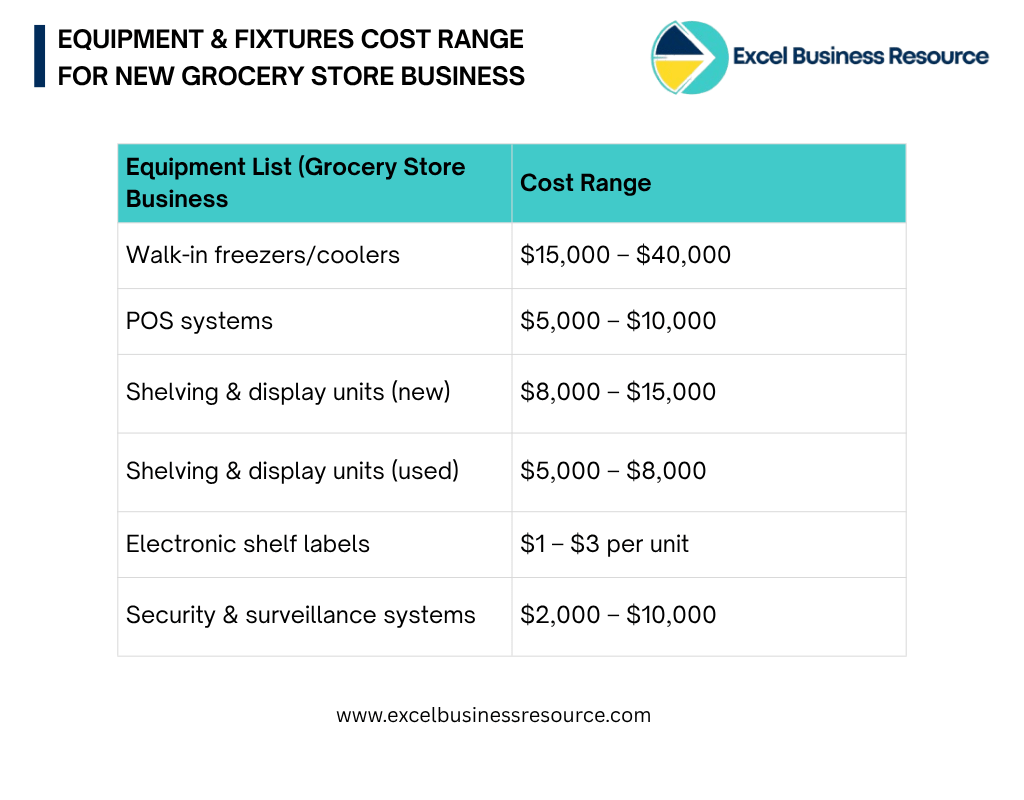
What Do Store Equipment and Fixtures Cost?
Equipment is where your budget grows fast. Refrigeration alone can eat up a large chunk of your funds if you are running a full service store.
Total equipment for a new grocery store typically lands between $35,000 and $85,000 or more, according to ZhSunyco. This covers refrigeration, shelving, checkout counters, carts, and basic technology.
One tip that saves cash early on: lease your bigger equipment instead of buying it outright. It keeps more money in your account while you get the store running.
How Much Inventory Do You Need to Open?
Your opening stock depends on your store size and the range of products you carry.
- A small convenience style grocery store can open with $10,000 to $50,000 in inventory.
- A full service supermarket needs $150,000 or more just for opening stock, according to ZhSunyco.
Here is a tip that helps your cash flow: ask suppliers for net 30 or net 60 payment terms. That gives you a month or two to sell products before the bill is due.
What Does Store Build Out and Interior Design Cost?
If you are renovating a space or building from the ground up, interior costs typically run $400 to $2,000 per square foot. The final number depends on your finishes, layout, and whether you need to install new refrigeration lines, according to RetailersPOS.
A 3,000 square foot store built at $600 per square foot lands at $1.8 million in construction costs alone. This is exactly why many grocery owners choose a second generation retail space, one that already has plumbing and electrical work in place. It cuts your build cost dramatically.
What Licenses and Permits Do You Need?
Before you open, you will need business registration, food handler permits, and a health department inspection. If you plan to sell alcohol, add a liquor license to that list.
Budget $4,999 to $10,000 for registration, permits, and legal fees combined.
How Much Should You Budget for Staffing?
Labor is your second biggest cost after inventory. The average hourly wage for grocery store workers ranges from $17.79 to $28.85, according to AIEinkSmart. Once you add benefits, expect labor costs to sit around 12 to 13 percent of your total sales.
- A small store usually pays $7,500 to $12,500 a month in payroll.
- A mid size store typically pays $25,000 to $50,000 a month.
How Much Does Marketing Cost for a Grocery Store Launch?
Do not skip this step. Your neighbors need to know you exist before they will walk through your doors. A realistic marketing budget for your first year should cover local digital ads, a strong Google Maps listing, social media, and a grand opening event.
Set aside $5,000 to $50,000, depending on how big you want your launch to be.
How Much Working Capital Should You Keep in Reserve?
This is the number most first time owners get wrong. You need cash to keep the lights on while your customer base grows. Industry experts recommend holding 6 to 18 months of operating expenses in reserve before you even open the doors.
How Much Investment Is Required for a Grocery Store?
Put all of these pieces together and here is what total investment required for a grocery store looks like at each stage:
- Bare bones mini market: starting around $20,000
- Independent grocery store: $80,000 to $300,000
- Full scale supermarket: $300,000 to well over $1 million
Your final number depends heavily on whether you lease or build, how much fresh food you carry, and how many months of working capital you keep in the bank.
What Are the Daily and Monthly Operating Costs of a Grocery Store?
Once your doors are open, your grocery store daily operating costs turn into a monthly rhythm. For a small to mid size store, monthly operating expenses usually total $13,000 to $21,300. Cost of goods sold takes the biggest bite out of that number.
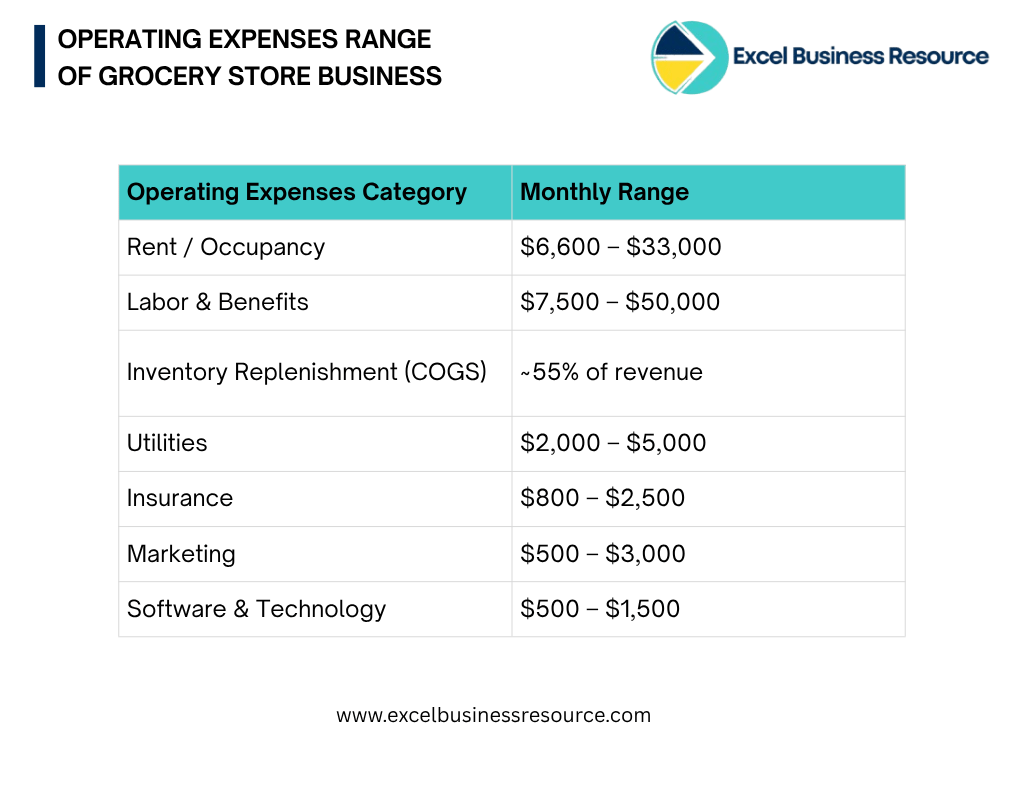
This is why tracking your unit economics from day one matters so much. Small wins, cutting shrinkage, negotiating better supplier terms, adjusting your category mix, can be the difference between staying open and closing your doors.
What Profit Margin Can You Expect From a Grocery Store?
Here is the part most new owners are not ready for: grocery margins are thin.
According to FMI (Food Marketing Institute), net profit margins across the grocery industry hit 1.6 percent in 2023, the lowest number since 2019. Toast POS reports the industry average typically sits between 1 and 3 percent net.
That same source found the average pre tax profit margin across the industry is 2.2 percent of total revenue. For a store bringing in $5 million a year, that works out to $100,000 to $150,000 in profit before taxes. That is a solid number, but only once you reach that revenue level.
Gross margins tell a better story. Most grocery stores run 25 to 30 percent gross margins before operating costs come out of that figure.
What Pushes Your Margins Higher?
- Fresh produce, deli, and specialty items carry far higher margins than packaged goods
- Private label products can boost margins by 10 to 15 percent
- Loyalty programs keep customers coming back and raise your average basket size
- Shrinkage control matters more than most owners realize. Industry shrinkage averages around 3.1 percent of revenue. Cutting that number in half puts real money back in your pocket.
When Will Your Grocery Store Start Making Money?
This is the question every owner and every investor wants answered.
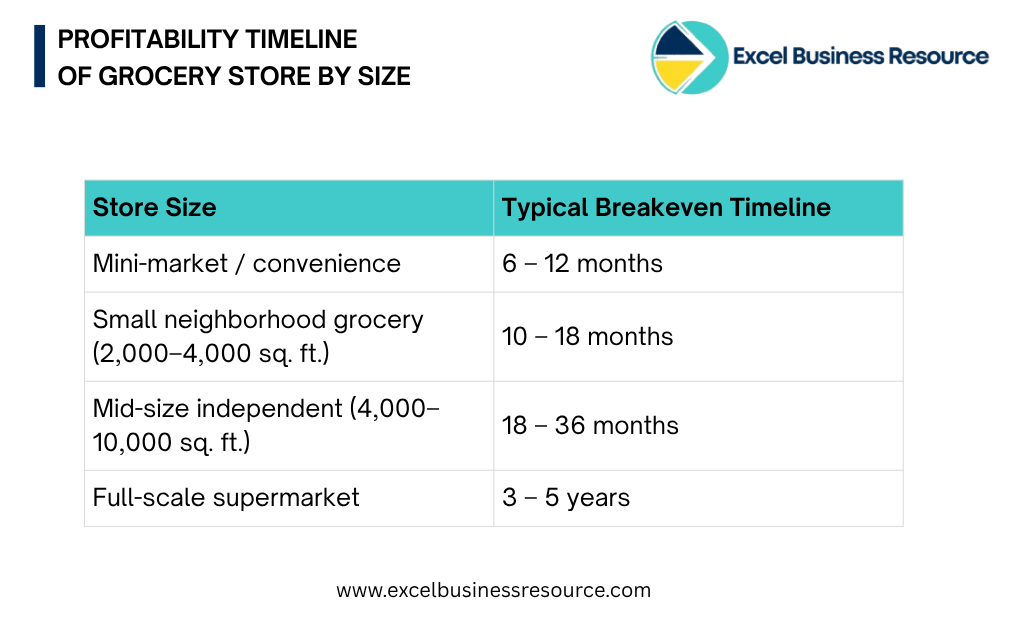
Based on current industry data, most small grocery stores reach breakeven between 10 and 18 months after opening, assuming monthly revenue of $20,000 to $30,000, according to BusinessDojo.
For a small store, the real target is hitting $20,000 to $50,000 in monthly sales. Getting there takes steady foot traffic, smart inventory turnover (the industry average is 10 to 15 times a year), and tight cost control.
How Do You Plan Your Grocery Store Finances Before You Spend a Dollar?
Most grocery store startups do not fail because of bad products or a bad location. They fail because the owner never modeled the real numbers before launch. They underestimate how much working capital they need, overestimate how fast revenue will grow, and run out of cash before the business turns a corner.
A solid financial model template for grocery store fixes that problem before it starts. It should give you:
- A startup cost planner so you know your full capital requirement before you commit
- Monthly profit and cash flow projections so you know exactly when you break even
- Revenue driver analysis across different store sizes and traffic levels
- A five year forecast in the format banks and investors expect to see
- Sensitivity analysis showing how changes in rent, labor, or product costs affect your bottom line.
Whether you are writing a business plan for your grocery store, pitching investors, or applying for an SBA loan, this kind of model is your financial backbone. It is the difference between guessing and knowing.
How Can You Lower Your Grocery Store Startup Costs?
No matter your store size, these five levers have the most impact on your grocery store’s profitability:
1. Optimize your product mix. High-margin fresh, deli, and specialty items should anchor your floor plan, not be afterthoughts. The more of your revenue that comes from these categories, the better your overall margin.
2. Control shrinkage ruthlessly. Expired products, theft, and damaged goods eat directly into margin. Implement FIFO inventory management and invest in a solid POS system from day one.
3. Negotiate supplier terms. Your COGS is your biggest cost. Even a 2–3% improvement in supplier pricing can meaningfully improve profitability. Build supplier relationships as early as possible.
4. Know your revenue drivers. Understanding which products, categories, and customer segments drive the most revenue and margin, it’s foundational. This is where solid understanding of revenue drivers of grocery store pays dividends over time.
5. Track your KPIs weekly, not monthly. Gross margin per category, inventory turnover, shrinkage rate, average transaction value, and weekly foot traffic are the KPIs of a grocery store that owners need to watch closely. By the time you see problems in monthly financials, you’ve already lost weeks of cash.
Tools & Resources for Your Grocery Store Financial Planning
If you’re serious about launching a grocery business, here are the resources that will save you time and money:
- Grocery Store Financial Model Template — Complete 5-year financial model with startup costs, P&L, and cash flow
- Startup Financial Model Templates — Browse all industry-specific models
- Free Cash Runway Template — Know exactly how many months of runway you have
- Free Revenue Forecasting Template — Build your revenue forecast from the ground up
- Financial Model Templates for Retail Businesses — Explore the full retail category
- How FP&A Helps Scale Your Startup — Why financial planning is a growth tool, not just accounting
At Excel Business Resource, we’ve worked with 100+ startups across data analysis, FP&A, and financial modeling. We understand what investors look for, what banks require, and what numbers actually matter when you’re building a business from zero.
Bottom Line
The cost to start a grocery store ranges from $20,000 for a bare bones mini market to well over $1 million for a full scale supermarket. Most independent stores in the $80,000 to $300,000 range reach breakeven within 10 to 18 months, as long as they plan carefully and manage costs from day one.
Grocery is not a high margin business. It is a volume business, an efficiency business, and above all, a planning business. The owners who win are the ones who build their financial model before they ever sign a lease.
At Excel Business Resource (www.excelbusinessresource.com), we help startup founders and small business owners build investor-ready financial models, conduct FP&A, and turn financial data into clear business decisions. If you need a custom financial model or want expert support for your grocery store business plan, reach out to us.
Frequently Asked Questions
How much does it cost to open a grocery store?
A small grocery store costs between $20,000 and $80,000 to open. A mid size independent store runs $80,000 to $300,000. A full scale supermarket can cost $300,000 to over $1 million.
How much investment is required for a grocery store?
Total investment depends on store size, location, and whether you lease or buy your building. Most independent grocery stores need $80,000 to $300,000 to cover rent, equipment, inventory, licenses, and working capital.
What are the daily operating costs of a grocery store?
Monthly operating expenses for a small to mid size store typically run $13,000 to $21,300. Cost of goods sold makes up the largest share, followed by payroll and rent.
How long does it take for a grocery store to become profitable?
Most small grocery stores reach breakeven between 10 and 18 months after opening, assuming monthly revenue of $20,000 to $30,000.
What profit margin does a grocery store make?
Net profit margins across the grocery industry typically run 1 to 3 percent. Gross margins are much healthier, usually 25 to 30 percent before operating expenses.